


JF-T Rod End Bearing Selection Guide: Sizes, Threads, Materials & Applications
 Sep 04, 2026|
 View:19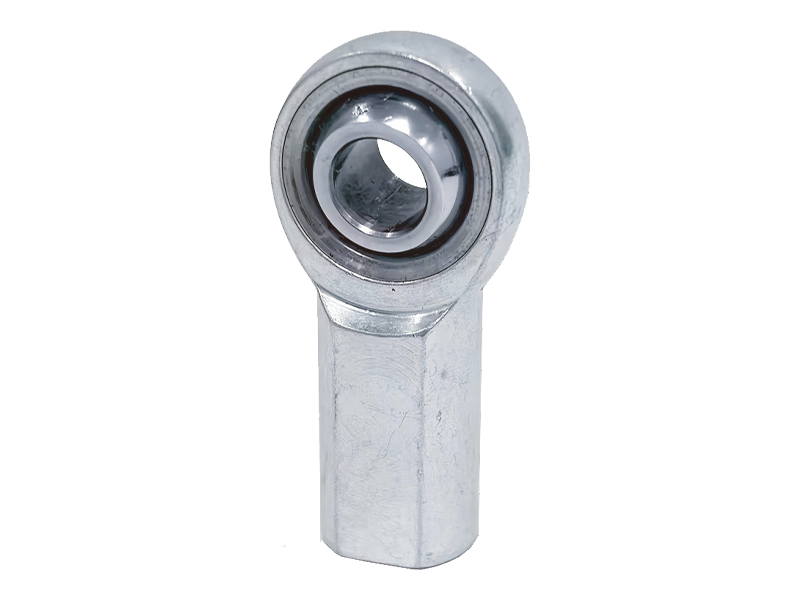
Selecting the right rod end bearing is important for machinery manufacturers, maintenance teams, distributors, and engineering buyers who need reliable angular movement and mechanical linkage. For equipment designed around inch-based dimensions, a JF-T self-lubricating rod end bearing can be a practical option when a female-threaded connection and low-maintenance sliding performance are required.
However, selecting a JF-T rod end bearing involves more than checking the bore diameter. Buyers should also confirm the thread specification, thread direction, load requirements, available installation space, materials, surface treatment, and operating conditions.
This guide explains what a JF-T rod end bearing is, how to select the appropriate size, and what overseas buyers should check before placing an order.
What Is a JF-T Rod End Bearing?
A JF-T rod end bearing is a female-threaded spherical plain rod end bearing designed for mechanical linkages that require angular movement between connected components. The JF-T series uses an internal thread and inch dimensions, making it suitable for equipment and assemblies designed around inch-standard components.
The self-lubricating design uses a steel/PTFE composite sliding pair to provide low-friction movement without relying on routine grease lubrication during normal operation. The rod-end body is made from medium carbon steel and features zinc plating, while the bearing steel ball is heat treated and hard chrome plated for the sliding surface.
The JF-T series is available in multiple sizes, allowing engineers to select a rod end according to bore diameter, thread specification, load requirements, and installation dimensions.
Key Characteristics of JF-T Rod End Bearings
Female/internal thread design
Inch-standard dimensions
Self-lubricating sliding structure
Steel/PTFE composite sliding pair
Medium carbon steel rod-end body
Zinc-plated surface
Heat-treated bearing steel ball
Hard chrome-plated spherical surface
Right-hand and left-hand thread options
Multiple bore and thread sizes
Suitable for various industrial linkage applications
Why Choose a Self-Lubricating Rod End Bearing?
Lubrication requirements are an important consideration when selecting a rod end bearing. Conventional sliding bearings may require periodic lubrication depending on their construction and operating conditions. A self-lubricating design incorporates a sliding material intended to reduce the need for routine lubrication.
The JF-T series uses a steel/PTFE composite sliding pair. This construction is designed to provide smooth relative movement between the spherical surfaces while reducing routine maintenance requirements.
Reduced Routine Maintenance
For machinery with limited access to linkage components, reducing routine lubrication requirements can simplify maintenance.
Self-lubricating rod end bearings can be considered for applications where regular grease lubrication is inconvenient or where maintenance intervals need to be simplified.
Suitable for Angular Movement
Rod end bearings are commonly used where a connected shaft, pin, or linkage needs to accommodate angular movement. The spherical bearing structure allows relative angular movement between the rod end and mating component.
Compact Mechanical Connection
A threaded rod end provides a compact way to connect mechanical components. The internal thread of a JF-T rod end can be matched with a suitable threaded shaft or component according to the equipment design.
Important: Self-lubricating does not mean that every application can operate under unlimited load, speed, temperature, or environmental conditions. Bearing selection should always be based on the actual operating requirements.
6 Factors to Consider When Selecting a JF-T Rod End Bearing
For overseas buyers, the following six factors should be confirmed before ordering JF-T rod end bearings.
1. Check Whether You Need a Female Thread
The first question is whether the equipment requires an internal or external thread.
The JF-T series is a female rod end bearing, meaning the thread is located inside the rod-end body. It is designed to connect with a compatible male-threaded component.
Before ordering, check the mating component and confirm:
Internal or external thread requirement
Nominal thread size
Thread pitch
Thread standard
Available thread length
Connection method
Do not select a rod end only by its outside dimensions or bore diameter. The thread must also match the mating component.
2. Confirm Inch Thread Compatibility
One of the defining characteristics of the JF-T series is its inch-standard dimension and thread configuration.
Gonuo's JF-T range includes multiple thread sizes, from compact configurations such as 6-32 through larger configurations including 1-1/4-12.
| Model Example | Thread Specification |
|---|---|
| JF2T | 6-32 |
| JF4T | 1/4-28 |
| JF6T | 3/8-24 |
| JF8T | 1/2-20 |
| JF10T | 5/8-18 |
| JF12T | 3/4-16 |
| JF14T | 7/8-14 |
| JF16T | 1-1/4-12 |
Always verify the exact specification against the technical drawing and the mating component before placing a purchase order.
3. Match Bore Diameter and Load Requirements
The bore diameter determines the size of the pin or shaft that passes through the spherical bearing.
However, bore diameter alone should not determine the bearing size.
Buyers should also consider:
Static load
Dynamic load
Radial load
Frequency of movement
Angular movement
Shaft or pin diameter
Installation space
Expected service conditions
For example, selecting a larger bore because it physically fits the shaft does not automatically mean that the bearing is suitable for the application's load or installation requirements.
A proper selection should compare the required operating load with the manufacturer's published load rating for the specific JF-T model.
4. Select the Correct Thread Direction
Thread direction is another important consideration for machinery manufacturers and OEM buyers.
The standard JF-T configuration uses a right-hand thread. Left-hand thread versions are also available by adding the "L" suffix to the model designation. For example, JF10T indicates the standard configuration, while JFL10T indicates a left-hand-thread version.
This distinction is particularly important for assemblies where two threaded components need to be adjusted in opposite directions.
Before ordering, confirm whether the application requires:
Right-hand thread
Left-hand thread
A combination of right- and left-hand threaded components
Incorrect thread direction can prevent proper installation even when the bearing dimensions are otherwise correct.
5. Consider the Operating Environment
The operating environment can affect rod end bearing selection and service performance.
Before choosing a JF-T rod end bearing, consider whether the application involves:
Dust or contamination
Moisture
Corrosive conditions
Frequent movement
Heavy mechanical loading
Limited maintenance access
Outdoor operation
High or low operating temperatures
The JF-T rod-end body uses zinc plating, while the bearing steel ball uses hard chrome plating. These surface treatments form part of the product's material and surface-treatment configuration.
For demanding applications, buyers should provide the supplier with actual operating conditions so the selected bearing can be evaluated against the application requirements.
6. Evaluate Maintenance Requirements
Maintenance requirements should be considered together with bearing design.
The JF-T series uses a self-lubricating steel/PTFE composite sliding structure. This can reduce the need for routine lubrication compared with designs that rely on regular grease application.
However, buyers should distinguish between:
Self-lubricating
and
Completely maintenance-free under all conditions.
The actual service life depends on factors such as load, movement, contamination, installation accuracy, and operating environment.
JF-T Rod End Bearing Size Selection Guide
The JF-T series includes multiple sizes for different mechanical connection requirements.
When selecting a size, review the complete technical specification rather than choosing solely by model number.
| Model | Example Thread | Bore / Connection Size | Selection Consideration |
|---|---|---|---|
| JF2T | 6-32 | Compact size | Small mechanical linkages |
| JF4T | 1/4-28 | Small size | Compact equipment |
| JF6T | 3/8-24 | Medium-small size | General linkage applications |
| JF8T | 1/2-20 | Medium size | Industrial mechanical systems |
| JF10T | 5/8-18 | Medium size | Machinery linkage |
| JF12T | 3/4-16 | Larger size | Higher-size connection requirements |
| JF14T | 7/8-14 | Large size | Larger mechanical connections |
| JF16T | 1-1/4-12 | Larger size | Large linkage applications |
The exact dimensions and load ratings should be checked against the manufacturer's current technical data before final selection.
JF-T Right-Hand vs Left-Hand Rod End Bearings
For applications requiring adjustable linkage assemblies, thread direction can be an important design factor.
Right-Hand Thread
The standard JF-T configuration uses a right-hand thread.
For example:
JF10T
Left-Hand Thread
For a left-hand thread configuration, the model designation uses the "L" suffix.
For example:
JFL10T
This naming convention allows buyers to distinguish between standard and left-hand configurations when preparing a bill of materials.
When ordering multiple rod ends for one assembly, specify the thread direction for each position rather than assuming that all rod ends use the same thread direction.
Where Are JF-T Rod End Bearings Used?
JF-T self-lubricating rod end bearings can be considered for mechanical linkage applications where a female-threaded connection and spherical movement are required.
Industrial Automation
Rod end bearings can be used in automated machinery and mechanical linkage systems where components need controlled angular movement.
Potential applications include:
Automated production equipment
Packaging machinery
Mechanical actuators
Motion linkage systems
Industrial machinery
Construction Machinery
Construction equipment uses numerous mechanical linkage systems that require compact connections and movement between components.
Rod end bearings may be used in selected linkage assemblies where their size, load capacity, and operating conditions are suitable.
Material Handling Equipment
Material handling machinery often contains moving linkage components.
Potential applications include:
Conveying equipment
Lifting systems
Handling mechanisms
Mechanical adjustment systems
Off-Highway Machinery
Off-highway equipment may use rod ends in mechanical linkages and control mechanisms.
Selection should take into account vibration, contamination, loading, movement frequency, and environmental conditions.
Hydraulic and Pneumatic Cylinders
Rod end bearings can also be used with hydraulic and pneumatic cylinder linkage systems where the connection requires angular movement.
For cylinder applications, buyers should verify the rod-end thread, bore, load requirements, available space, and connection geometry before selecting the bearing.
JF-T vs Other Rod End Bearing Configurations
Different rod end bearing designs are available for different equipment requirements. The main distinction is not simply the bearing's size but also the connection configuration and dimensional standard.
JF-T vs Metric Female Rod End Bearings
The main difference is the dimensional system.
JF-T:
Female thread
Inch dimensions
Inch thread specifications
Metric female rod end:
Female thread
Metric dimensions
Metric thread specifications
If the mating component uses an inch-standard thread, an inch rod end such as JF-T can help avoid dimensional mismatch.
JF-T vs Male Rod End Bearings
The key difference is the thread configuration.
JF-T:
Female/internal thread
Designed to accept a compatible male-threaded component
Male rod end:
Male/external thread
Designed to connect to a compatible female-threaded component
The correct configuration depends on the mechanical design of the assembly.
What Should Overseas Buyers Ask a Rod End Bearing Manufacturer?
Before placing a bulk order, OEM buyers and distributors should confirm both technical and commercial information.
Technical Questions
Ask the supplier:
What is the exact thread specification?
Is the rod end female or male?
Is the thread right-hand or left-hand?
What is the bore diameter?
What are the load ratings?
What materials are used?
What surface treatment is applied?
Is the sliding structure self-lubricating?
What are the available sizes?
Can the supplier provide technical drawings?
Quality Questions
For production and OEM purchasing, also ask:
What inspection procedures are used?
Can dimensional inspection reports be provided?
Is material traceability available?
What quality documentation is available?
Can samples be supplied before mass production?
How are products packaged for international shipment?
Commercial Questions
For distributors and volume buyers, consider asking:
What is the MOQ?
What is the standard lead time?
Are small trial orders accepted?
Can the supplier support recurring orders?
Are OEM specifications available?
Can packaging be customized?
What export markets does the supplier currently serve?
A supplier that can provide clear technical information before ordering can make the sourcing and qualification process easier for international buyers.
Can JF-T Rod End Bearings Be Customized?
Customization can be important when a standard bearing does not exactly match the customer's equipment.
Depending on the project, buyers may need customized:
Dimensions
Thread specifications
Materials
Surface treatments
Packaging
Product markings
For OEM projects, the most efficient approach is to provide the supplier with a technical drawing or detailed specification.
The supplier can then evaluate whether the requested dimensions and materials can be produced within the required manufacturing tolerances.
Why Source JF-T Rod End Bearings from Gonuo?
Gonuo provides the JF-T series for buyers looking for self-lubricating female rod end bearings with inch-standard dimensions.
The JF-T series covers multiple sizes and thread configurations and uses a steel/PTFE composite sliding structure. Gonuo also provides OEM customization options for selected dimensions, thread specifications, materials, and surface treatments.
For international buyers, supplier evaluation can focus on several practical factors:
Product Range
A broader size range allows buyers to source different JF-T specifications from one supplier instead of managing multiple sources.OEM Support
Customized dimensions, threads, materials, and surface treatments can be considered for applications that require specifications beyond standard models.Quality Inspection
Dimensional accuracy, smooth operation, material traceability, and inspection documentation are important considerations when sourcing precision mechanical components.Flexible Supply
Small-batch requirements, samples, and recurring bulk orders may require different supply arrangements. Discussing MOQ and lead time with the supplier before ordering can help buyers establish a suitable purchasing plan.
JF-T Rod End Bearing Purchasing Checklist
Before sending an RFQ, overseas buyers can prepare the following information:
Product
JF-T series
Required quantity
Standard or customized design
Thread
Female/internal thread
Thread size
Thread pitch
Right-hand or left-hand thread
Inch standard
Dimensions
Bore diameter
Overall dimensions
Thread length
Installation space
Performance
Required load
Movement frequency
Angular movement
Operating environment
Expected service conditions
Quality
Material requirements
Surface treatment
Inspection requirements
Technical documentation
Commercial
MOQ
Sample requirements
Target quantity
Delivery destination
Packaging requirements
Providing these details in the initial RFQ can help a rod end bearing supplier respond with a more accurate product recommendation and quotation.
FAQ About JF-T Self-Lubricating Rod End Bearings
What is a JF-T rod end bearing?
A JF-T rod end bearing is a female-threaded, inch-standard spherical plain rod end bearing with a self-lubricating steel/PTFE composite sliding structure.
Is the JF-T rod end bearing self-lubricating?
Yes. The JF-T series uses a steel/PTFE composite sliding pair designed for self-lubricating operation and reduced routine lubrication requirements.
Is JF-T a female or male rod end bearing?
JF-T is a female rod end bearing with an internal thread.
Is JF-T available in inch sizes?
Yes. The JF-T series is designed around inch-standard dimensions and thread specifications.
What is the difference between JF10T and JFL10T?
JF10T represents the standard right-hand-thread configuration, while JFL10T indicates the left-hand-thread version.
How do I choose the right JF-T size?
Start by confirming the required bore diameter and mating thread. Then evaluate load requirements, installation dimensions, movement, operating conditions, and thread direction before selecting the specific model.
Are JF-T rod end bearings suitable for hydraulic cylinders?
JF-T rod end bearings can be considered for selected hydraulic and pneumatic cylinder linkage applications. The specific model should be selected according to the cylinder connection, load, movement, thread, and operating conditions.
Can JF-T rod end bearings be customized?
OEM customization may be available for dimensions, thread specifications, materials, surface treatments, and other project requirements. Buyers should provide technical drawings or detailed specifications for evaluation.
Are JF-T rod end bearings maintenance-free?
The self-lubricating design can reduce routine lubrication requirements, but "maintenance-free" should not be interpreted as unlimited service under every operating condition. Actual service requirements depend on load, movement, contamination, installation, and environment.
What information should I provide when requesting a JF-T quotation?
Provide the required model or dimensions, thread specification, thread direction, quantity, application, load requirements, operating environment, and any OEM or packaging requirements. A technical drawing is recommended for customized products.
Conclusion
Choosing the right JF-T rod end bearing requires more than matching a bore diameter. Overseas buyers should confirm the female thread configuration, inch-standard dimensions, thread direction, load requirements, materials, surface treatment, operating environment, and maintenance requirements before placing an order.
For machinery manufacturers, distributors, and OEM buyers, the JF-T series provides a practical option when an inch-standard, female-threaded, self-lubricating spherical rod end bearing is required.
If you are sourcing JF-T rod end bearings for industrial automation, construction machinery, material handling equipment, off-highway machinery, hydraulic systems, or a customized OEM project, providing the supplier with your technical requirements in advance can help ensure the selected bearing matches your application.
CATEGORIES: