


Rod End Bearing: Structure, Applications, and Common Models
 Aug 28, 2026|
 View:103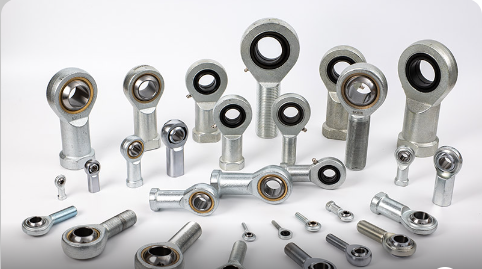
A rod end bearing, also known as a spherical rod end bearing or Heim joint, is a mechanical component designed to connect moving parts while allowing angular movement and transmitting loads efficiently. It is widely used in hydraulic systems, industrial automation equipment, construction machinery, agricultural machinery, and other applications where precise motion control and reliable mechanical connections are required.
Unlike standard bearings that mainly support rotational movement, rod end bearings are specifically designed to handle oscillating motion, radial loads, and angular misalignment between connected components.
Choosing the right rod end bearing is critical for improving equipment performance, reducing maintenance requirements, and extending service life.
As a professional rod end bearing manufacturer, Gonuo Bearing provides a wide range of solutions, including male rod end bearings, female rod end bearings, self lubricating rod end bearings, and customized rod end bearings for global industrial applications.
What Is a Rod End Bearing?
A rod end bearing is a type of spherical plain bearing mounted inside a rod-shaped housing. It consists of a threaded body and a spherical bearing surface that allows the connected shaft or rod to rotate and move at different angles.
The main function of a rod end bearing is to:
Transfer mechanical loads
Allow angular movement
Compensate for installation misalignment
Reduce stress between connected components
Rod end bearings are commonly installed at the ends of hydraulic cylinders, control rods, linkages, and mechanical arms.
Structure of a Rod End Bearing
Understanding the structure of a rod end bearing helps engineers select the right type for different applications.
1. Rod End Housing
The housing is the outer body that connects the bearing to mechanical equipment. It provides high mechanical strength and protects internal bearing components.
Male Rod End Bearing
A male rod end bearing features an external thread design.
Advantages include:
Easy installation
High connection strength
Suitable for compact mechanical structures
Common applications include hydraulic cylinders, construction equipment, and industrial machinery.
Female Rod End Bearing
A female rod end bearing uses an internal thread design.
Advantages include:
Compact structure
Flexible installation
Suitable for precision applications
Common applications include automation equipment, motion control systems, and mechanical linkages.
2. Spherical Bearing Element
The spherical bearing inside the rod end allows angular rotation between connected parts. This design helps absorb alignment errors, reduce mechanical stress, and maintain smooth movement.
Steel-on-Steel Rod End Bearing
Steel-on-steel rod end bearings are designed for heavy-duty applications.
High load capacity
Excellent wear resistance
Suitable for harsh environments
Requires regular lubrication
Self Lubricating Rod End Bearing
A self lubricating rod end bearing uses PTFE composite liners or special sliding materials to reduce friction.
Maintenance free operation
Low friction coefficient
No regular grease lubrication required
Long service life
3. Thread Connection
Rod end bearings are available with different thread configurations:
Male thread
Female thread
Metric thread
Inch thread
Left-hand thread
Right-hand thread
How Does a Rod End Bearing Work?
A rod end bearing works by allowing controlled angular movement between two connected components.
The spherical inner ring rotates inside the bearing housing, allowing the connected shaft or rod to move while maintaining stable load transmission.
This working principle provides:
Angular misalignment compensation
Reduced vibration and mechanical stress
Improved equipment reliability
Extended component service life
For example, a hydraulic cylinder rod end bearing allows the cylinder rod to move smoothly even when there is slight alignment deviation during operation.
Common Types of Rod End Bearings
1. Male Rod End Bearing
A male rod end bearing features an external threaded shank and is commonly used where the bearing needs to be screwed directly into equipment components.
External thread design
High load capacity
Easy installation
Suitable for heavy mechanical applications
Common Model: SA Series Male Rod End Bearing
The SA series is one of the most widely used male rod end bearing designs.
Steel/steel sliding structure
High strength housing
Multiple size options
Suitable for demanding industrial environments
2. Female Rod End Bearing
A female rod end bearing uses an internal threaded connection and provides a compact solution for mechanical assemblies.
Internal thread design
Space-saving installation
Reliable load transmission
Common Model: SI Series Female Rod End Bearing
The SI series is commonly selected for industrial applications requiring reliable movement control.
3. Self Lubricating Rod End Bearing
A self lubricating rod end bearing is designed for applications where regular maintenance is difficult or unnecessary.
Common models include:
NHS Series Female Rod End Bearing
NOS Series Male Rod End Bearing
SI-C Series
SA-C Series
Rod End Bearing Common Models
| Model Series | Type | Lubrication | Applications |
|---|---|---|---|
| SA Series | Male Rod End Bearing | Lubricated | Heavy machinery |
| SI Series | Female Rod End Bearing | Lubricated | Hydraulic systems |
| NOS Series | Male Self Lubricating Bearing | PTFE | Automation systems |
| NHS Series | Female Self Lubricating Bearing | PTFE | Precision equipment |
Applications of Rod End Bearings
Hydraulic Cylinder Applications
A hydraulic cylinder rod end bearing helps connect cylinder rods, absorb alignment deviation, and improve movement stability.
Construction Machinery
Rod end bearings are widely used in excavators, loaders, cranes, and mining equipment because they provide high strength and reliable operation.
Industrial Automation Equipment
Self lubricating rod end bearings are commonly used in robotic arms, CNC equipment, packaging machines, and automated production lines.
How to Choose the Right Rod End Bearing?
1. Consider Load Requirements
Check static load capacity, dynamic load capacity, and impact load conditions before selecting a bearing.
2. Choose Lubrication Type
Maintenance required rod end bearings are suitable for heavy-duty applications, while self lubricating rod end bearings are ideal for automation and low-maintenance systems.
3. Select Male or Female Thread Design
Choose according to installation requirements:
Male rod end bearing: external threaded connection
Female rod end bearing: internal threaded connection
Why Choose Gonuo as Your Rod End Bearing Manufacturer?
Gonuo Bearing specializes in manufacturing rod end bearings, spherical bearings, ball joints, and mechanical linkage components for global industrial customers.
Key advantages include:
OEM and customized manufacturing capability
Complete rod end bearing product range
Stable production and quality control
Global industrial supply experience
FAQ About Rod End Bearings
1. What is the difference between SA and SI rod end bearings?
The main difference between SA and SI rod end bearings is the thread design.
SA Series rod end bearing features a male thread (external thread), which is suitable for applications requiring direct connection to components.
SI Series rod end bearing features a female thread (internal thread), providing a compact installation solution.
Both series are widely used in hydraulic cylinders, industrial machinery, automation equipment, and mechanical linkage systems.
2. Where are SI female rod end bearings commonly used?
SI female rod end bearings are widely used in:
Hydraulic systems
Automation equipment
Motion control devices
Mechanical linkages
Industrial machines
They are ideal for applications requiring compact installation and precise movement.
3.What is the difference between PHS and SI rod end bearings?
Both PHS and SI are female rod end bearings, but they differ in design standards and application requirements.
Generally:
SI series is commonly used for industrial hydraulic and mechanical systems.
PHS series is widely used for general linkage and motion applications.
The selection depends on load requirements, installation space, and operating conditions.
Conclusion
Rod end bearings are essential mechanical components that provide reliable connection, load transmission, and angular movement in industrial equipment.
Understanding the differences between male rod end bearings, female rod end bearings, self lubricating rod end bearings, and maintenance required rod end bearings helps engineers select the right solution.
As an experienced rod end bearing manufacturer, Gonuo Bearing provides reliable bearing solutions for hydraulic systems, automation equipment, construction machinery, and other industrial applications.
Need a Custom Rod End Bearing Solution?
Gonuo Bearing is a professional rod end bearing manufacturer providing standard and customized solutions including male rod end bearings, female rod end bearings, self lubricating rod end bearings, and OEM bearing solutions.
Contact our engineering team today for product selection support, technical consultation, and customized quotation.
Request a QuoteTags:
CATEGORIES:
