


Rod End Bearing Materials Explained: Steel, Stainless Steel and PTFE Options
 Jul 23, 2026|
 View:149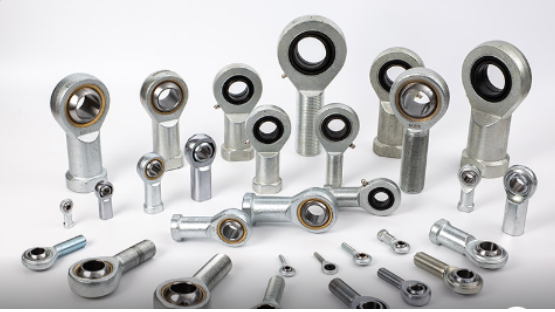
Material selection plays a critical role in determining the performance, durability, and application range of a rod end bearing. Different industrial environments require different combinations of strength, corrosion resistance, friction performance, and service life.
The most common materials used in rod end bearings include steel, stainless steel, and PTFE composite materials. Understanding their differences helps engineers and buyers choose the right solution for hydraulic systems, automation equipment, and heavy machinery.
As an experienced rod end bearing manufacturer, Gonuo provides customized rod end bearing solutions using different material combinations to meet various application requirements.
Key Takeaways
Steel rod end bearings provide high strength and cost efficiency.
Stainless steel rod end bearings offer excellent corrosion resistance.
PTFE liners improve lubrication performance and reduce maintenance.
Material selection should match load, environment, and operating conditions.
Common Rod End Bearing Materials
1. Steel Rod End Bearings
Steel is one of the most widely used materials for industrial rod end bearings.
Advantages:
High mechanical strength
Excellent load capacity
Good wear resistance
Cost-effective solution
Steel rod end bearings are commonly used in:
Construction machinery
Industrial equipment
Hydraulic systems
General mechanical applications
For applications requiring strong load support and durability, steel rod end bearings are usually the preferred choice.
2. Stainless Steel Rod End Bearings
Stainless steel rod end bearings are designed for environments where corrosion resistance is important.
Advantages:
Excellent corrosion resistance
Suitable for humid environments
Longer service life
Good dimensional stability
Typical applications include:
Marine equipment
Food processing machinery
Chemical equipment
Outdoor systems
Although stainless steel rod end bearings generally have higher costs, they provide better protection against corrosion.
3. PTFE Rod End Bearings
PTFE is commonly used as a self lubricating sliding material inside rod end bearings.
PTFE-lined rod end bearings offer:
Low friction
Maintenance-free operation
Smooth movement
Reduced wear
They are especially suitable for:
High-cycle motion systems
Precision equipment
Hydraulic cylinders
Automation machinery
Steel vs Stainless Steel vs PTFE Rod End Bearings
| Material | Main Advantage | Typical Application |
|---|---|---|
| Steel | High strength and economical | Heavy machinery |
| Stainless Steel | Corrosion resistance | Marine and outdoor equipment |
| PTFE | Low friction and self lubrication | Automation and hydraulic systems |
How to Select Rod End Bearing Materials?
Consider Load Requirements
Heavy-duty applications usually require steel rod end bearings because of their high strength.
Consider Environmental Conditions
For humid or corrosive environments, stainless steel rod end bearings provide better protection.
Consider Maintenance Requirements
If lubrication access is limited, PTFE self lubricating rod end bearings are a better choice.
Consider Operating Temperature
Different materials have different temperature resistance levels, so operating conditions should be evaluated before selection.
Why Material Quality Matters for Rod End Bearings?
A rod end bearing operates under repeated loads and movement cycles. Poor material selection may result in:
Increased wear
Reduced accuracy
Higher maintenance costs
Shorter service life
Choosing the correct material combination ensures:
Stable mechanical performance
Longer operating life
Better reliability
Custom Rod End Bearing Solutions from Gonuo
Gonuo provides professional rod end bearing manufacturing services for international customers.
Available solutions include:
Steel rod end bearings
Stainless steel rod end bearings
PTFE self lubricating rod end bearings
Male and female rod end bearings
Customized OEM designs
By combining suitable materials with precision manufacturing processes, Gonuo helps customers achieve reliable performance in different industrial applications.
FAQ About Rod End Bearing Materials
Which material is best for rod end bearings?
The best material depends on the application. Steel is suitable for heavy loads, stainless steel is ideal for corrosion resistance, and PTFE designs are preferred for low-maintenance applications.
Are PTFE rod end bearings better than steel rod end bearings?
PTFE rod end bearings provide lower friction and maintenance-free operation, while steel rod end bearings offer higher mechanical strength. The better choice depends on working conditions.
Can rod end bearings be customized with different materials?
Yes. Professional manufacturers can customize rod end bearings according to load requirements, thread specifications, environmental conditions, and application needs.
Tags:
CATEGORIES:
