


What Is a Male Rod End Bearing and How Does It Work?
 Jul 15, 2026|
 View:109
In mechanical linkage systems, components often need to transfer force while allowing rotational movement and angular adjustment. A male rod end bearing is a widely used mechanical connection component designed to provide smooth movement between connected parts.
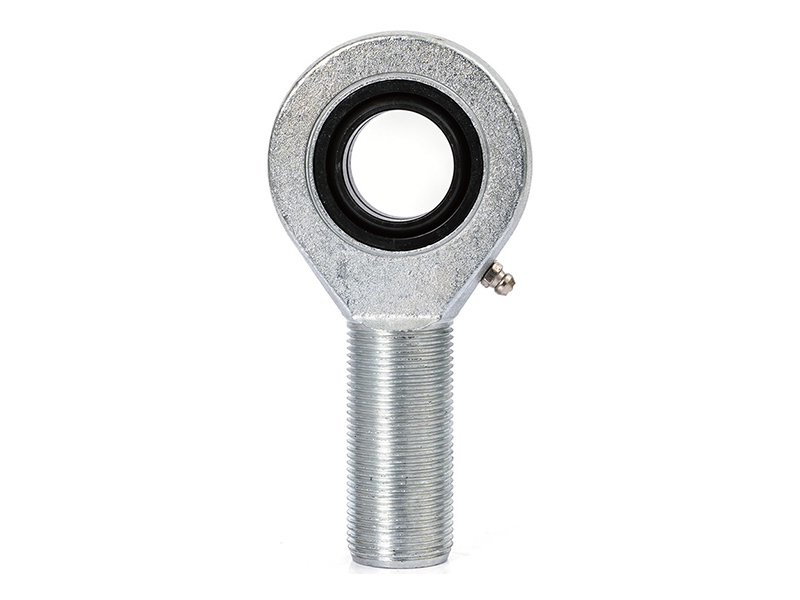
Unlike standard bearings that mainly support rotation, a male rod end bearing combines a spherical bearing structure with an externally threaded shank, allowing it to connect directly with rods, shafts, actuators, and other mechanical components.
Due to its flexibility, compact structure, and reliable performance, male rod end bearings are commonly used in:
Hydraulic cylinders
Automotive suspension systems
Industrial automation equipment
Agricultural machinery
Robotics
Motion control systems
For manufacturers and distributors, choosing a professional rod end bearing supplier with OEM capability is essential for obtaining reliable and application-specific solutions.
Key Takeaways
A male rod end bearing features an externally threaded shank for easy mechanical connection.
It allows angular movement while transmitting radial and axial loads.
Male threaded rod end bearings are widely used in hydraulic, automotive, and industrial applications.
Material, thread type, load capacity, and lubrication design affect bearing performance.
An experienced OEM rod end bearing manufacturer can provide customized solutions.
1. What Is a Male Rod End Bearing?
A male rod end bearing is a mechanical joint component consisting of a spherical bearing head and an externally threaded shaft.
The threaded shank allows the bearing to be screwed into or connected with other mechanical parts, creating an adjustable linkage system.
The basic structure includes:
| Component | Function |
|---|---|
| Spherical ball | Provides angular movement |
| Bearing housing | Supports the spherical element |
| Male threaded shank | Connects with other components |
| Lubrication system | Reduces friction and wear |
The spherical design enables the bearing to accommodate misalignment between connected components while maintaining smooth motion.
2. How Does a Male Rod End Bearing Work?
A male rod end bearing works through spherical sliding motion.
During operation:
The threaded shank transfers mechanical force.
The spherical ball rotates inside the housing.
The bearing compensates for angular misalignment.
The connected components move smoothly during operation.
This design allows mechanical systems to handle:
Oscillating movement
Rotational movement
Angular deviation
Combined loading conditions
Compared with fixed joints, a male rod end bearing provides greater flexibility and movement control.
3. Male Rod End Bearing Structure Explained
3.1 Male Threaded Shank
The key feature of a male rod end bearing is the external thread.
Advantages include:
Easy installation
Adjustable positioning
Strong mechanical connection
Compact assembly design
Common thread standards include:
Metric threads
Imperial threads
Customized thread designs
3.2 Spherical Bearing Head
The spherical head allows movement in multiple directions.
It helps:
Reduce binding caused by misalignment
Improve mechanical flexibility
Maintain smooth operation
3.3 Sliding Material Options
Different applications require different bearing materials.
Common options include:
Steel-on-steel
Steel-on-bronze
PTFE-lined self-lubricating designs
A self-lubricating male rod end bearing is often selected for applications requiring reduced maintenance.
4. Male Rod End Bearing vs Female Rod End Bearing
A common question from engineers is:
What is the difference between male and female rod end bearings?
| Feature | Male Rod End Bearing | Female Rod End Bearing |
|---|---|---|
| Thread type | External thread | Internal thread |
| Installation | Screws into threaded holes | Receives threaded components |
| Space requirement | Suitable for compact designs | Suitable for enclosed assemblies |
| Adjustment | Easy external adjustment | Different mounting requirements |
Male Rod End Bearing Advantages
Easy mounting
Flexible adjustment
Common industrial application
Suitable for linkage systems
Female Rod End Bearing Advantages
Compact structure
Protected internal thread
Suitable for specific mounting designs
5. Applications of Male Rod End Bearings
5.1 Hydraulic Cylinders
Hydraulic systems frequently use male rod end bearings because they allow:
Angular adjustment
Smooth cylinder movement
Reliable force transmission
Applications include:
Construction machinery
Agricultural equipment
Industrial hydraulic systems
5.2 Automotive Suspension Systems
Male rod end bearings are commonly used in performance and racing applications.
They provide:
Precise suspension movement
Improved linkage control
Adjustable positioning
5.3 Industrial Automation Equipment
Automation systems require accurate mechanical movement.
Male rod end bearings are used in:
Robotic arms
Linear actuators
Motion control systems
5.4 Agricultural Machinery
Applications include:
Steering mechanisms
Control linkages
Moving joints
The bearing design helps agricultural equipment operate under vibration and changing load conditions.
6. Advantages of Male Rod End Bearings
6.1 Angular Movement Capability
The spherical design allows movement even when connected components are not perfectly aligned.
6.2 Compact Mechanical Design
The integrated threaded structure reduces installation space compared with separate bearing assemblies.
6.3 Easy Installation and Adjustment
The external thread allows quick connection and positioning.
6.4 Wide Application Range
Male rod end bearings are suitable for various industries requiring controlled mechanical movement.
7. How to Select the Right Male Rod End Bearing?
Choosing the correct male rod end bearing requires considering several factors.
7.1 Load Capacity
Evaluate:
Radial load
Axial load
Combined loads
The bearing size should match the application force requirements.
7.2 Thread Size and Type
Important considerations:
Thread diameter
Thread direction
Metric or imperial standard
7.3 Material Selection
| Material | Application |
|---|---|
| Carbon steel | General industrial use |
| Stainless steel | Corrosion-resistant applications |
| Alloy steel | High-load applications |
7.4 Lubrication Requirements
Choose between:
Lubricated Design
Suitable for:
Heavy loads
Regular maintenance environments
Self-Lubricating Design
Suitable for:
Limited maintenance applications
Automated equipment
8. How to Choose a Reliable Male Rod End Bearing Supplier?
When purchasing male rod end bearings, companies should evaluate:
Manufacturing Capability
A professional supplier should have:
Precision machining equipment
Strict quality inspection
Stable production capacity
Product Customization
A reliable supplier should support:
Custom thread sizes
Special dimensions
Material selection
OEM production
Quality Control
Important quality factors include:
Dimensional accuracy
Load testing
Surface treatment
Product consistency
Working with an experienced OEM rod end bearing supplier helps manufacturers reduce development costs and improve supply stability.
9. Why Choose Gonuo for OEM Male Rod End Bearings?
Gonuo Bearing provides professional rod end bearing solutions for global industrial applications.
The company offers:
Male rod end bearing series
Female rod end bearing solutions
Customized OEM rod end bearings
Industrial bearing components
With manufacturing expertise and customization capabilities, Gonuo supports customers requiring:
Different thread specifications
Various material options
Application-specific designs
For companies looking for a dependable male rod end bearing supplier, OEM capability, production quality, and technical support are important factors when selecting a long-term partner.
FAQ
What is a male rod end bearing used for?
A male rod end bearing is used to connect mechanical components while allowing angular movement and force transmission.
What is the difference between a male and female rod end bearing?
A male rod end bearing uses an external thread, while a female rod end bearing uses an internal thread.
Are male rod end bearings suitable for hydraulic cylinders?
Yes. Male rod end bearings are widely used in hydraulic cylinders because they provide flexible connection and angular adjustment.
What materials are used for male rod end bearings?
Common materials include carbon steel, stainless steel, alloy steel, and PTFE-lined designs.
How do I choose a male rod end bearing supplier?
Choose a supplier with manufacturing experience, OEM customization capability, strict quality control, and support for different industrial applications.
Conclusion
A male rod end bearing is an essential mechanical component that combines a spherical bearing structure with an externally threaded connection system. Its ability to handle angular movement, misalignment, and mechanical loads makes it suitable for a wide range of industrial applications.
From hydraulic systems and automotive components to automation equipment and agricultural machinery, selecting the right male rod end bearing improves system reliability and operational performance.
Partnering with an experienced rod end bearing supplier that provides OEM rod end bearing solutions enables manufacturers to obtain customized, high-quality products designed for specific engineering requirements.
CATEGORIES:


