


What Are Rod End Bearings? A Complete 2026 Guide to Structure, Types, Applications & Selection
 May 09, 2026|
 View:113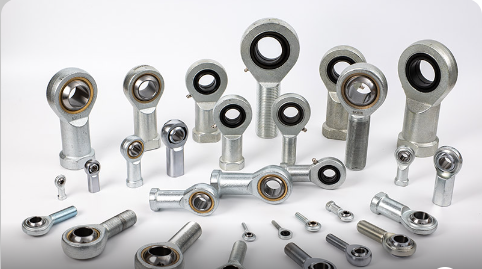
Introduction
In automotive systems, agricultural machinery, industrial automation, robotics, and precision transmission equipment, rod end bearings are among the most widely used and critical motion components. Despite their small size, these compact, high-performance joints enable smooth angular movement, absorb vibration, and maintain precise alignment under heavy loads and harsh working conditions.
If you are an engineer, maintenance manager, procurement specialist, or equipment designer asking What are rod end bearings?, this complete guide is written for you. We explain the definition, structure, working principle, classifications, materials, applications, selection criteria, installation, maintenance, and troubleshooting of rod end bearings in clear, simple language.
At Gonuo Hardware, we have over 20 years of experience designing and manufacturing high-precision rod end bearings for global customers across 70+ countries. Our ISO 9001:2015 certified products deliver exceptional load capacity, wear resistance, and service life. Whether you need standard parts or custom solutions, this guide will help you fully understand rod end bearings and choose the right components for your project.
1. What Are Rod End Bearings? Official Definition
Rod end bearings (also called rose joints, heim joints, or spherical rod ends) are precision mechanical articulation components that combine a spherical bearing with an integrated threaded rod end. They allow angular misalignment, shaft rotation, and oscillating movement while transmitting axial and radial loads between connected components.
Unlike standard bearings, rod end bearings feature a built-in threaded shaft (male or female) for direct, rigid installation into linkages, control arms, actuators, and mechanical joints. Their spherical sliding design compensates for mounting errors, shaft deflection, and structural movement, ensuring smooth operation without binding or premature wear.
In short, rod end bearings provide a flexible, high-strength connection that supports swing, tilt, and rotational motion while maintaining stable load transmission — making them indispensable in almost all mechanical motion systems.
2. Core Structure of Rod End Bearings
A standard rod end bearing consists of four key components:
1. Spherical Ball (Inner Member)
The precision spherical ball is the rotating core, usually made of bearing steel, stainless steel, or alloy steel. It provides low-friction movement and high load resistance.
2. Outer Race / Housing
The outer ring encases the spherical ball and connects to the threaded shank. It is precision-forged or machined for strength and durability.
3. Threaded Shank (Rod End)
The threaded extension allows easy installation into mechanical linkages. It is available in male thread (external threads) or female thread (internal threads) to fit different assembly needs.
4. Lubrication System & Seals
Many rod end bearings include grease fittings and dust seals to protect internal components from water, dust, dirt, and corrosion, extending service life in harsh environments.
This simple but robust structure allows rod end bearings to withstand repeated oscillation, shock loads, and lateral forces while maintaining smooth, quiet operation.
3. How Do Rod End Bearings Work?
The working principle of rod end bearings is straightforward but highly effective:
Step 1: Load Transmission
When force is applied to the connected linkage, the load transfers through the threaded shank to the outer race and spherical ball.
Step 2: Angular Movement
The spherical ball rotates and swivels freely inside the outer race, allowing angular misalignment (typically up to ±10° to ±15°) to compensate for shaft deviation or mechanical movement.
Step 3: Friction Reduction
Precision-finished sliding surfaces and internal lubrication minimize friction, preventing wear and ensuring stable, long-term performance.
Step 4: Alignment Compensation
Rod end bearings automatically adjust for mounting errors, vibration, and structural expansion/contraction, eliminating binding and reducing stress on connected components.
This unique design makes rod end bearings superior to rigid connectors in dynamic systems, reducing failure rates and improving overall equipment reliability.
4. Common Types of Rod End Bearings
Rod end bearings are classified by several key criteria to match different applications:
By Thread Type: Male rod end bearings (external threads) and female rod end bearings (internal threads).
By Material: Carbon steel, bearing steel, stainless steel, and alloy steel for different working environments.
By Lubrication & Seal: Greaseable models with Zerk fitting and sealed maintenance-free versions for dust and water resistance.
By Performance Level: Standard duty, heavy-duty, and precision grade for various industrial requirements.
At Gonuo Hardware, we offer all types of rod end bearings with customizable materials, threads, seals, and sizes.
5. Key Advantages of Rod End Bearings
1. Excellent Angular Misalignment Compensation
Rod end bearings easily tolerate shaft misalignment and deflection, preventing component damage.
2. High Load Capacity
Strong forged construction withstands radial, axial, and shock loads in heavy-duty environments.
3. Long Service Life & Wear Resistance
Premium materials and precision finishing deliver extended service life than standard connectors.
4. Smooth, Low-Noise Operation
Low-friction spherical design ensures quiet, stable movement in precision equipment.
5. Easy Installation & Adjustment
Threaded shanks allow fast, rigid mounting without complex fixtures.
6. Wide Environmental Adaptability
Sealed and stainless-steel versions perform reliably in wet, dusty, corrosive, or high-vibration conditions.
7. Customizable Design
Available in various sizes, threads, materials, and seals to fit unique project requirements.
6. Primary Applications of Rod End Bearings
Rod end bearings are used in nearly every industry that requires mechanical linkage and motion control:
Automotive & Transportation: Steering linkages, suspension control arms, tie rod ends, shift linkages.
Agricultural Machinery: Tractor linkages, harvester controls, hydraulic actuator joints.
Industrial Automation & Robotics: Robotic arm joints, conveyor actuators, precision transmission linkages.
Construction & Heavy Machinery: Excavators, loaders, hydraulic cylinders, lifting equipment.
Marine & Offshore Equipment: Ship control linkages, hatch actuators, deck machinery with corrosion resistance.
Aerospace, Rail & Military: High-precision control systems requiring extreme reliability.
No matter your industry, rod end bearings improve performance, stability, and service life.
7. How to Choose the Right Rod End Bearings
Follow this practical 7-step guide to select the best rod end bearings for your project:
1. Determine Load Type & Magnitude
Choose heavy-duty models for high axial/radial loads; standard for light loads.
2. Select Male or Female Thread
Match your existing linkage design for easy installation.
3. Choose Material Based on Environment
Indoor/dry: Carbon steel or bearing steel. Outdoor/wet/corrosive: Stainless steel.
4. Confirm Thread Size & Pitch
Use standard industrial threads (metric, imperial, UNC, UNF) for compatibility.
5. Select Sealed or Greaseable
Sealed = maintenance-free for harsh environments. Greaseable = extended life for heavy-duty use.
6. Check Precision & Tolerance
Precision-grade for automation; commercial-grade for general machinery.
7. Choose a Reliable Manufacturer
Prioritize ISO-certified suppliers with strict quality control and customization support.
By following these steps, you ensure optimal performance and avoid premature failure.
8. Installation & Maintenance Tips for Rod End Bearings
Correct Installation
Clean mounting surfaces and threads before assembly. Use proper torque to avoid over-tightening and binding. Align shafts to minimize excess angular load. Lubricate upon installation if not pre-sealed.
Routine Maintenance
Regularly inspect for wear, play, or corrosion. Re-grease greaseable models at recommended intervals. Replace seals if damaged to prevent contamination. Replace worn rod end bearings immediately to avoid linkage failure.
Proper maintenance greatly extends the life of rod end bearings and maintains equipment safety.
9. Common Troubleshooting for Rod End Bearings
Problem 1: Excessive Play / Looseness
Cause: Wear, lack of lubrication, or overload. Solution: Replace bearing; check load rating; improve lubrication.
Problem 2: Stiff Movement / Binding
Cause: Misalignment, over-tightening, or contamination. Solution: Re-align linkage; clean and lubricate; check installation torque.
Problem 3: Abnormal Noise & Vibration
Cause: Dry friction, dirt intrusion, or worn ball surface. Solution: Clean, lubricate, or replace damaged bearing.
Problem 4: Corrosion & Rust
Cause: Moisture or chemical exposure. Solution: Use stainless-steel or coated rod end bearings.
Most issues can be prevented with correct selection, installation, and maintenance.
10. Why Choose Gonuo Hardware Rod End Bearings?
With over 20 years of manufacturing experience, Gonuo Hardware is a trusted global supplier of premium rod end bearings:
1. Exceptional Quality & Durability
ISO 9001:2015 certified; precision CNC machining; 100% tested for strength and wear resistance.
2. Full Material & Size Range
Carbon steel, bearing steel, stainless steel, alloy steel; male/female threads; custom sizes available.
3. Heavy-Duty Performance
High load capacity, smooth operation, longer service life than standard options.
4. Complete Customization
OEM/ODM support; custom threads, materials, seals, and dimensions.
5. Fast & Reliable Service
1-hour response; 24-hour quotation; on-time delivery; stable supply chain.
6. Global Customer Trust
Exported to 70+ countries; widely used in automotive, agriculture, automation, and heavy machinery.
When you choose Gonuo rod end bearings, you choose consistent quality, reliable performance, and long-term partnership.
Conclusion
To answer the question What are rod end bearings? — they are precision articulation components that enable smooth angular movement, compensate for misalignment, and transmit loads reliably in mechanical systems.
Their compact design, high strength, and versatility make rod end bearings essential in automotive, agricultural, industrial, robotic, and marine applications. Choosing the right rod end bearings improves equipment performance, reduces downtime, and lowers long-term costs.
This complete guide has covered definition, structure, working principle, types, advantages, applications, selection, installation, maintenance, and troubleshooting — providing all the information you need to use rod end bearings effectively.
At Gonuo Hardware, we are committed to providing high-quality, high-precision rod end bearings and customized solutions for global customers. With advanced production lines, strict quality control, and professional technical support, we help you enhance equipment reliability and achieve project success.
Tags:
CATEGORIES:


