


SA vs SA..E vs SA..ES Rod End Bearings: What Is the Difference?
 Sep 24, 2026|
 View:53
When sourcing a metric male rod end bearing, buyers may encounter designations such as SA, SA..E, and SA..ES. Although theserod end bearings share a similar basic function, their construction, lubrication configuration, sealing or protection features, and application requirements can differ.
For OEMs, engineers, hydraulic equipment manufacturers, and industrial bearing distributors, understanding these designations is important before selecting a model.
This guide explains the differences between SA, SA..E, and SA..ES rod end bearings, what specifications to check, and how to select the appropriate configuration for your application.
What Is an SA Series Rod End Bearing?
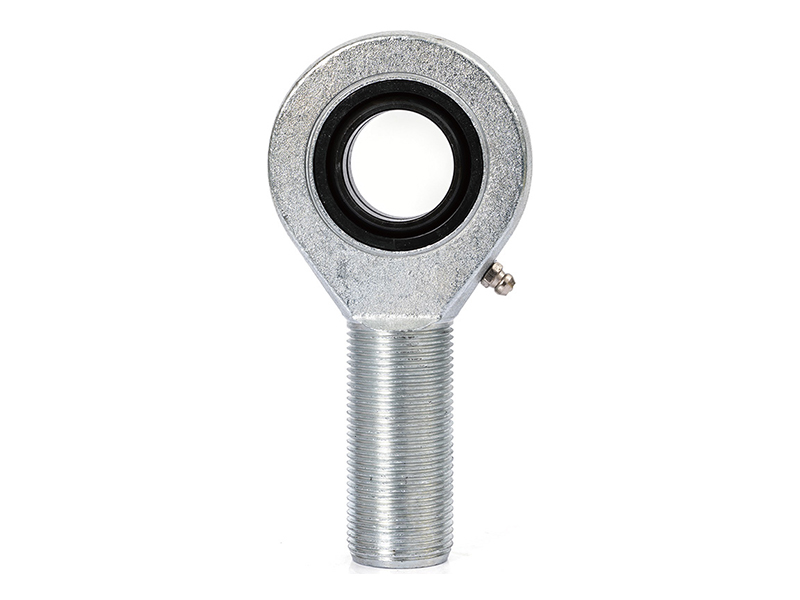
An SA series rod end bearing is a type of male rod end bearing designed to provide a mechanical connection while allowing angular movement and oscillation between connected components.
A typical rod end assembly consists of a threaded shank and a spherical bearing element. The threaded shank allows the rod end to be installed into a corresponding component, while the spherical bearing accommodates angular movement between the connected parts.
Metric male rod end bearings are commonly used in:
Hydraulic and pneumatic cylinders
Industrial machinery
Automation equipment
Agricultural machinery
Construction equipment
Mechanical linkages
Material handling equipment
General motion-control systems
For applications involving repeated oscillating movement, the correct combination of bore diameter, thread size, load rating, lubrication, and environmental protection is essential.
SA vs SA..E vs SA..ES: What Is the Difference?
The first step is to understand that these designations should not be treated simply as three interchangeable product names.
Depending on the manufacturer's product standard, the suffix can identify differences in the bearing's construction or configuration. Therefore, buyers should always check the manufacturer's technical drawing and specification table before substituting one model for another.
For the Gonuo SA..E(S) Series, the key selection factors include:
| Selection Factor | What Buyers Should Check |
|---|---|
| Bearing type | Male rod end bearing |
| Bore diameter | Match the mating pin or shaft |
| Thread | Metric thread and required thread direction |
| Load | Dynamic and static load ratings |
| Lubrication | Required lubrication method and access |
| Protection | Sealing or environmental protection requirements |
| Movement | Oscillating or angular movement |
| Installation | Available mounting space |
| Application | Hydraulic, industrial, agricultural or other machinery |
The important point is that the model designation alone should not be used to determine suitability. The technical specifications and actual working conditions should be considered together.
What Is an SA..E Rod End Bearing?
The SA..E rod end bearing is a metric male rod end configuration designed for mechanical linkage applications where controlled angular movement and load transmission are required.
One of its important characteristics is the use of a steel-on-steel sliding contact configuration, which is commonly associated with applications requiring high load-carrying capability and regular maintenance through lubrication.
Key Characteristics to Consider
When selecting an SA..E rod end bearing, buyers should check:
Bore diameter
Thread size
Thread direction
Dynamic load rating
Static load rating
Lubrication arrangement
Overall dimensions
Operating environment
Required maintenance conditions
Because steel-on-steel bearing surfaces require appropriate lubrication, the maintenance requirements should be considered during equipment design.
Where Are SA..E Rod End Bearings Used?
SA..E rod end bearings can be considered for applications such as:
Hydraulic cylinders
Mechanical actuators
Industrial machinery
Agricultural equipment
Construction machinery
Automated mechanical linkages
The specific model should be selected according to the load, movement, dimensions, and operating environment of the equipment.
What Is an SA..ES Rod End Bearing?
The SA..ES series belongs to the same general family of metric male rod end bearings but represents a specific configuration within the product range.
When comparing SA..E and SA..ES, buyers should not rely only on the similar appearance of the two models. The detailed product drawing and technical specifications should be checked for the exact differences in construction and protection.
Important considerations include:
Bore size
Thread dimensions
Housing dimensions
Lubrication arrangement
Sealing or protection configuration
Load capacity
Installation dimensions
For OEM purchasing, these details are particularly important because even a small dimensional difference can affect interchangeability.
SA..E vs SA..ES: Which One Should You Choose?
There is no universal answer to whether SA..E or SA..ES is the right choice. The appropriate configuration depends on the mechanical requirements of the application.
Choose Based on Mechanical Compatibility
First, confirm:
Bore diameter
Thread diameter
Thread direction
Thread length
Overall mounting dimensions
A bearing with the wrong thread or bore cannot be treated as a direct replacement simply because the nominal size appears similar.
Choose Based on Load
Next, compare the required operating load with the bearing's rated capacity.
Consider both:
Dynamic load rating
Static load rating
Dynamic loading is important when the rod end is subjected to repeated movement, while static load capacity becomes particularly relevant when the bearing experiences a stationary or shock-loaded condition.
For machinery with frequent oscillating movement, engineers should evaluate the actual load spectrum rather than selecting a bearing based only on nominal bore size.
Choose Based on Lubrication
For steel-on-steel rod end bearings, lubrication is an important part of maintenance.
Before purchasing, determine:
How the bearing will be lubricated
Where lubrication will be applied
How frequently maintenance can be performed
Whether the installation allows easy access
Whether contamination could affect the lubrication system
A bearing that technically fits the assembly may not be suitable if its maintenance requirements cannot be supported in the field.
Choose Based on the Operating Environment
The working environment can also affect selection.
For example, machinery operating in:
Dusty environments
Outdoor conditions
Agricultural applications
Construction sites
Industrial production lines
Areas with moisture or contamination
may require greater consideration of sealing, protection, lubrication, and maintenance access.
How to Choose the Right Metric Male Rod End Bearing
Choosing a rod end bearing should be treated as a complete engineering selection process rather than simply matching a product number.
1. Determine the Bore Diameter
The bore must match the mating pin or shaft. A mismatch can lead to excessive clearance, installation problems, uneven load distribution, or premature wear.
Always compare the manufacturer's dimensional drawing with the mating component.
2. Confirm the Metric Thread
For a metric male rod end bearing, verify the thread specification required by the equipment.
Check thread diameter, thread pitch, thread length, and right-hand or left-hand thread. Thread compatibility is especially important when replacing an existing component.
3. Check Dynamic Load Rating
If the rod end experiences repeated movement, the dynamic load rating is an important selection parameter.
The actual application should be evaluated based on radial load, frequency of movement, oscillation angle, operating speed, and load direction.
4. Check Static Load Rating
Static load rating becomes important when the bearing is subjected to a stationary load or significant shock loading.
For construction machinery, agricultural machinery, and heavy industrial equipment, both dynamic and static conditions should be evaluated.
5. Consider Lubrication
If you choose a steel-on-steel rod end bearing, establish a suitable lubrication and maintenance procedure.
Regular lubrication can help control friction and wear during operation.
6. Consider Installation Space
Do not check only the bore and thread. The complete dimensions may affect installation clearance, housing interference, adjacent components, rotation range, and maintenance access.
For OEM projects, dimensional drawings should be reviewed before finalizing the bearing model.
Why Does Lubrication Matter for Steel-on-Steel Rod End Bearings?
Lubrication is particularly important for steel-on-steel sliding contact.
During operation, the bearing surfaces may experience repeated relative movement. Without appropriate lubrication, friction and wear can increase.
A suitable lubrication system can help:
Reduce friction
Reduce sliding wear
Support smoother movement
Maintain the bearing's working condition
Extend service life when operated within the specified conditions
However, lubrication is not a substitute for correct bearing selection.
The bearing must still be correctly sized for the load, movement, installation, and environmental conditions.
RH vs LH Thread Rod End Bearings
Thread direction is another important specification that buyers sometimes overlook.
Right-Hand Thread
A right-hand thread is commonly used in standard threaded connections.
Left-Hand Thread
A left-hand thread can be useful in mechanisms where the thread direction is required for adjustment, assembly, or opposing threaded connections.
For equipment using rod ends as adjustable mechanical links, thread direction can directly affect installation and adjustment.
Before placing an order, specify whether the application requires:
RH thread
LH thread
A combination of RH and LH threads
Do not assume that two rod ends with the same bore diameter are interchangeable if their thread configurations differ.
Rod End Bearing Applications
Hydraulic Cylinders
Rod end bearings are commonly associated with hydraulic and pneumatic cylinder assemblies because they can accommodate angular movement between the cylinder and connected mechanism.
When selecting a rod end for a hydraulic cylinder, consider:
Cylinder load
Bore diameter
Thread compatibility
Oscillation
Installation space
Lubrication
Operating environment
Agricultural Machinery
Agricultural equipment can expose mechanical components to dust, dirt, moisture, vibration, and repeated movement.
For these applications, buyers should pay attention to:
Load capacity
Lubrication
Environmental protection
Maintenance accessibility
Durability requirements
Construction Machinery
Construction machinery can involve high loads, vibration, shock, and demanding working environments.
The selection process should therefore consider both the rated load and the actual operating conditions.
Industrial Automation
Rod end bearings can also be used in mechanical linkages and actuating mechanisms in industrial equipment.
For automation applications, engineers may place greater emphasis on:
Dimensional consistency
Thread accuracy
Smooth movement
Repeatable installation
Maintenance requirements
Rod End Bearing Selection Checklist for Buyers
Before ordering SA, SA..E, or SA..ES rod end bearings, overseas buyers should confirm the following information:
Product Information
Exact series and model
Bore diameter
Thread diameter
Thread pitch
Thread direction
Overall dimensions
Performance Requirements
Dynamic load
Static load
Oscillation angle
Operating frequency
Operating temperature
Maintenance Requirements
Lubrication method
Lubrication access
Maintenance frequency
Sealing/protection requirements
Purchasing Requirements
Required quantity
Sample requirement
Technical drawing
Inspection requirements
Packaging
Delivery time
OEM/customization requirements
Providing these specifications to the supplier can significantly reduce the risk of selecting an incompatible rod end bearing.
How to Buy SA..E(S) Rod End Bearings from a China Supplier
For overseas OEMs, distributors, and industrial buyers, purchasing rod end bearings should involve more than comparing unit prices.
A reliable sourcing process should include:
1. Confirm the Exact Model
Provide the exact SA, SA..E, or SA..ES designation required.
2. Confirm Technical Specifications
Ask the supplier to provide:
Dimensional drawings
Material information
Load ratings
Thread specifications
Lubrication information
Available configurations
3. Verify Application Compatibility
Explain the actual application to the supplier, including load, movement, environment, and installation conditions. This allows the supplier's technical team to verify whether the selected configuration is appropriate.
4. Discuss Samples and Bulk Orders
For new suppliers, buyers may request samples before proceeding with larger orders.
For distributors and OEMs, also confirm:
MOQ
Production lead time
Packaging
Inspection
Shipping terms
OEM requirements
Why Consider Gonuo for SA..E(S) Series Rod End Bearings?
Gonuo provides SA..E(S) Series Metric Male Rod End Bearings for industrial and mechanical applications.
The product range includes multiple metric sizes and configurations, allowing buyers to select rod end bearings according to bore diameter, thread requirements, load capacity, lubrication, and installation conditions.
For OEMs, machinery manufacturers, and bearing distributors, the key information to confirm before ordering includes the required model, dimensions, thread specification, load rating, lubrication requirements, and quantity.
If you are sourcing metric male rod end bearings in bulk, providing your application requirements and target specifications to the supplier can help determine the appropriate SA..E(S) configuration.
Frequently Asked Questions
What is the difference between SA and SA..E rod end bearings?
SA and SA..E are related rod end bearing designations, but the exact construction and specifications should be confirmed against the manufacturer's technical documentation. Buyers should compare dimensions, load ratings, lubrication arrangements, and other configuration details before selecting a replacement.
What is the difference between SA..E and SA..ES rod end bearings?
SA..E and SA..ES represent different configurations within the SA-series metric male rod end bearing family. The correct choice depends on the specific construction, protection, lubrication, dimensions, and application requirements specified by the manufacturer.
Are SA..E rod end bearings metric?
Yes. SA..E(S) products are available as metric male rod end bearings, with different bore and thread sizes for industrial applications.
Do steel-on-steel rod end bearings require lubrication?
Steel-on-steel sliding contact rod end bearings generally require appropriate lubrication and maintenance. The manufacturer's lubrication recommendations should be followed for the specific model and operating conditions.
How do I choose the correct rod end bearing size?
Start with the required bore diameter and thread specification, then check dynamic and static load ratings, installation dimensions, lubrication requirements, movement, and operating environment.
Can rod end bearings be used in hydraulic cylinders?
Yes. Rod end bearings can be used in hydraulic and pneumatic cylinder connections where angular movement and mechanical linkage are required. The selected model must match the cylinder's dimensions and operating loads.
Should I choose SA..E or SA..ES?
The choice should be based on the actual application and the manufacturer's specifications rather than the model name alone. Compare the dimensions, load ratings, lubrication arrangement, protection requirements, and operating environment before ordering.
What information should I provide when requesting a rod end bearing quotation?
For an accurate quotation, provide the required model or dimensions, bore diameter, thread specification, thread direction, quantity, application, and any requirements for OEM customization, packaging, inspection, or delivery.
Conclusion
SA, SA..E, and SA..ES rod end bearings should not be selected based on the model designation alone. For overseas OEMs, engineers, and distributors, the most important factors are bore size, metric thread, load rating, lubrication, environmental conditions, installation dimensions, and maintenance requirements.
For the Gonuo SA..E(S) Series, buyers should confirm the exact model and technical specifications before placing an order. Matching the bearing to the actual mechanical requirements helps ensure proper installation and reliable operation in hydraulic, industrial, agricultural, construction, and other machinery applications.
Tags:
CATEGORIES: