


How to Choose the Right Female Rod End Bearing for Your Application?
 Sep 14, 2026|
 View:14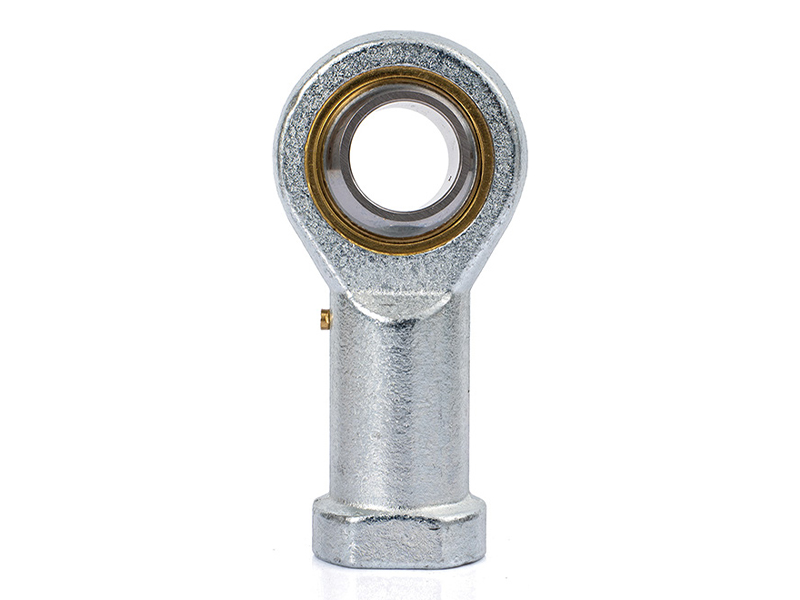
Choosing the right female rod end bearing is important for achieving reliable mechanical movement, accurate linkage, and long service life. The correct selection depends on more than bore size. Thread type, thread direction, load, lubrication requirements, material, angular movement, operating environment, and installation space should all be considered.
For machinery manufacturers, engineers, and industrial buyers, understanding these factors can help prevent premature wear, excessive friction, incorrect installation, and unnecessary maintenance.
Gonuo provides a broad range of female rod end bearings, including metric, imperial, maintenance-required, and self-lubricating designs. Its product range includes SI, PHS, PHSB, SIZJ, SI-T/K, NHS, SI-C, and CF-T series for different mechanical linkage requirements.
This guide explains how to select the right female rod end bearing for your application and how to match different bearing designs with specific operating conditions.
What Is a Female Rod End Bearing?
A female rod end bearing is a mechanical linkage component with an internal thread. It is designed to connect with a threaded rod, shaft, stud, or other male-threaded component while allowing angular movement between connected parts.
Unlike a conventional radial bearing that is primarily designed for continuous rotation, a rod end bearing is commonly used in linkage systems where oscillating movement, angular misalignment, or controlled articulation is required.
A typical female rod end bearing consists of:
A rod end body
An internal female thread
A spherical bearing or sliding contact structure
An inner ball
A sliding or self-lubricating material, depending on the design
Surface treatment for wear or corrosion resistance
The internal thread determines how the rod end connects to the mating component, while the spherical interface allows the connected parts to move through an angular range.
Female rod end bearings are widely used in mechanical linkages, hydraulic systems, industrial automation equipment, agricultural machinery, construction machinery, and other applications requiring compact articulated connections.
How Does a Female Rod End Bearing Work?
The working principle of a female rod end bearing combines threaded connection and spherical movement.
Internal Threaded Connection
The internal thread allows the rod end to connect directly with a male-threaded rod, shaft, or stud.
The thread must match the mating component in:
Diameter
Thread pitch
Thread standard
Thread direction
For this reason, selecting the correct thread specification is one of the first steps in female rod end bearing selection.
Angular Movement
Inside the rod end housing, the spherical bearing structure allows the connected shaft or pin to move at an angle relative to the housing.
This capability is useful when two connected components do not remain perfectly aligned during operation.
For example, a hydraulic cylinder linkage may change its angle as the cylinder extends and retracts. A suitable rod end bearing can accommodate this movement while maintaining the mechanical connection.
Load Transmission
A female rod end bearing transfers loads between connected mechanical components.
Depending on the application, engineers may need to consider:
Radial loads
Axial loads
Alternating loads
Shock loads
Dynamic loads
Oscillating loads
The bearing should therefore be selected according to the actual operating conditions rather than based only on bore diameter or thread size.
What Factors Should You Consider When Choosing a Female Rod End Bearing?
The right selection should normally consider at least eight factors:
| Selection Factor | What to Check |
|---|---|
| Thread Size | Diameter and pitch |
| Thread Standard | Metric or imperial |
| Thread Direction | LH or RH |
| Bore Size | Required pin or shaft diameter |
| Load | Static, dynamic, radial and axial loads |
| Lubrication | Maintenance-required or maintenance-free |
| Material | Body, ball and sliding materials |
| Environment | Dust, moisture, corrosion and temperature |
| Movement | Rotation, oscillation and angular movement |
| Installation | Available space and connection requirements |
The following steps can help engineers narrow down the correct female rod end bearing.
Step 1: Select the Correct Thread Size
Thread compatibility is one of the most important considerations.
Before ordering a female rod end bearing, identify the thread specification of the mating component. For metric systems, this may include sizes such as M6, M8, M10, M12, M16, M20, and larger sizes. The thread pitch must also be confirmed because the same nominal diameter can be available with different pitches.
For example:
M10 × 1.5
M10 × 1.25
M12 × 1.75
M12 × 1.25
These are not interchangeable.
Gonuo's SI-T/K series, for example, includes multiple metric sizes and selected alternative thread pitches, making it suitable for equipment where precise thread matching is required.
When selecting a female rod end bearing, do not choose the product based only on the bore diameter. Confirm the complete thread specification first.
Step 2: Choose Between Metric and Imperial Threads
The next question is whether your equipment uses metric or imperial thread standards.
Metric Female Rod End Bearings
Metric female rod end bearings are commonly selected for machinery designed around metric dimensions.
Gonuo's metric female rod end bearing range includes:
These products cover both maintenance-required and self-lubricating designs.
Imperial Female Rod End Bearings
Imperial female rod end bearings are suitable when the equipment uses inch-based dimensions.
Gonuo's SIZJ and CF-T series provide imperial female-thread options for different operating requirements.
The CF-T series, for example, uses an inch-standard internal thread and is available with left-hand or right-hand thread configurations.
The key rule is simple:
Do not mix metric and imperial thread systems unless the complete mechanical connection has been specifically designed for conversion.
Step 3: Determine Whether You Need an LH or RH Thread
Thread direction is another important selection factor.
RH Female Rod End Bearing
RH means right-hand thread. It is the standard thread direction used in many mechanical assemblies.
LH Female Rod End Bearing
LH means left-hand thread. Left-hand threads are used when the mechanical design requires the opposite tightening direction or specific adjustment behavior.
LH rod end bearings can be useful in:
Adjustable linkages
Tensioning mechanisms
Directional adjustment systems
Assemblies requiring controlled threaded adjustment
Gonuo offers LH and RH thread options across selected female rod end bearing series. For example, the SI-T/K and CF-T product ranges support left-hand and right-hand thread configurations.
Before ordering, confirm the required thread direction from the engineering drawing or assembly specification.
Step 4: Decide Between Maintenance-Required and Maintenance-Free Designs
Lubrication requirements can significantly influence bearing selection.
Maintenance-Required Female Rod End Bearings
Maintenance-required rod ends are suitable when regular lubrication can be provided during equipment maintenance.
Gonuo's PHS, PHSB, and SI series are examples of female rod end bearing designs within its maintenance-required range.
These types can be considered when:
Regular maintenance is available
Lubrication can be easily accessed
The application requires a conventional sliding structure
The equipment operates under demanding mechanical conditions
Maintenance-Free Female Rod End Bearings
A maintenance-free or self-lubricating female rod end bearing is often preferred when regular grease lubrication is difficult or undesirable.
Gonuo's SI-T/K, NHS, SI-C, and CF-T series use self-lubricating structures designed to reduce routine lubrication requirements.
These bearings can be particularly useful for:
Automated equipment
Difficult-to-access mechanisms
Compact linkage systems
Applications requiring reduced maintenance
Repetitive mechanical movement
The SI-T/K series uses a steel/PTFE composite sliding pair, while the NHS series uses a PTFE-based self-lubricating liner.
The choice should not simply be based on whether a bearing is labeled "maintenance-free." Engineers should also consider load, movement frequency, temperature, environment, and expected service life.
Step 5: Consider PTFE and Other Sliding Materials
The sliding material directly affects friction, wear, lubrication requirements, and maintenance.
PTFE composite materials are widely used in self-lubricating rod end bearings because they can provide low-friction sliding characteristics without requiring regular grease lubrication.
For example, Gonuo's SI-T/K series uses a steel/PTFE composite sliding pair, while its NHS series uses a PTFE-based self-lubricating liner.
A PTFE female rod end bearing can be a good choice when the application prioritizes:
Low friction
Reduced maintenance
Smooth angular movement
Long-term repetitive operation
Limited access for lubrication
However, PTFE is not automatically the best solution for every application. Load, speed, oscillation frequency, temperature, contamination, and installation conditions should all be evaluated.
Step 6: Evaluate Load and Movement Requirements
A female rod end bearing should be selected according to the actual forces and movements experienced by the mechanism.
Radial Load
Radial load acts perpendicular to the shaft or pin.
Axial Load
Axial load acts along the axis of the connected shaft.
Dynamic Load
Dynamic loads occur when the equipment is moving or when the load changes during operation.
Oscillating Movement
Many rod end bearings are used in mechanisms where the bearing repeatedly moves through a limited angular range rather than rotating continuously.
Angular Misalignment
One of the main advantages of a rod end bearing is its ability to accommodate angular movement between connected components.
When selecting a bearing, engineers should therefore evaluate both the magnitude and frequency of angular movement.
A bearing that is suitable for a slowly moving linkage may not be appropriate for a high-frequency automated mechanism.
Step 7: Consider the Operating Environment
The surrounding environment can have a significant impact on bearing performance.
Dust and Contamination
Agricultural and construction machinery may operate in environments containing dust, dirt, or other contaminants.
Moisture and Corrosion
Outdoor equipment may require suitable surface treatment and corrosion resistance.
Temperature
Temperature can affect sliding materials, lubrication, dimensional stability, and service life.
Limited Maintenance Access
If the bearing is installed inside an enclosed mechanism or difficult-to-access location, a self-lubricating design may reduce maintenance requirements.
The selection should therefore consider the entire operating environment rather than only the mechanical load.
Female Rod End Bearing Selection by Application
Different applications require different bearing characteristics.
| Application | Typical Requirement | Suitable Selection Direction |
|---|---|---|
| Hydraulic Cylinders | Load transmission and angular movement | Heavy-duty or application-specific female rod end |
| Agricultural Machinery | Contamination, shock and durability | Robust maintenance-required or suitable self-lubricating design |
| Construction Machinery | High loads and demanding conditions | Heavy-duty configuration |
| Industrial Automation | Repetitive movement and low maintenance | Self-lubricating female rod end |
| Material Handling | Frequent movement and reliability | Low-friction or maintenance-free design |
| General Machinery | Versatile mechanical linkage | Standard metric or imperial female rod end |
For hydraulic cylinders, for example, the bearing must accommodate the movement of the cylinder linkage while transmitting the required mechanical load.
For industrial automation, reduced friction and maintenance may become more important, especially when bearings are installed in equipment that operates continuously.
Which Gonuo Female Rod End Bearing Should You Choose?
Gonuo provides several female rod end bearing series for different design requirements.
SI Series
The SI series is a metric female rod end bearing option for applications requiring an internal threaded connection and conventional rod end structure.
It can be considered for general mechanical linkage applications where a metric female rod end bearing is required.
PHS Series
The PHS series is a metric, threaded and oil-lubricated female rod end bearing option.
It is suitable for applications where regular lubrication is acceptable and a conventional maintenance-required design is preferred.
PHSB Series
The PHSB series provides another threaded, oil-lubricated female rod end bearing configuration for industrial mechanical connections.
It can be considered when the application requires a threaded female rod end with a maintenance-based lubrication strategy.
SIZJ Series
The SIZJ series is an imperial female rod end bearing designed for inch-based mechanical systems.
It provides LH and RH thread options and is suitable for applications where imperial dimensions are required.
SI-T/K Series
The SI-T/K series is a metric self-lubricating female rod end bearing.
Its steel/PTFE composite sliding structure is designed for low-friction, maintenance-free operation. This makes it a suitable choice for equipment where regular grease lubrication is difficult or where reduced maintenance is a priority.
NHS Series
The NHS series is a metric self-lubricating female rod end bearing using a PTFE-based liner.
It is designed for mechanical linkage systems requiring smooth movement, low friction, and reduced lubrication requirements.
SI-C Series
The SI-C series provides another self-lubricating metric female rod end bearing option within Gonuo's maintenance-free product range.
It can be evaluated for equipment requiring a compact female-thread connection with reduced routine maintenance.
CF-T Series
The CF-T series is a self-lubricating imperial female rod end bearing.
It uses a steel/PTFE composite sliding pair and is available with LH and RH female thread configurations, making it suitable for inch-standard industrial equipment and linkage systems.
Female vs. Male Rod End Bearings: Which Should You Choose?
The main structural difference is the thread configuration.
| Female Rod End | Male Rod End |
|---|---|
| Internal thread | External thread |
| Connects to threaded rod or stud | Screws into threaded component |
| Suitable when internal thread is required | Suitable when external thread is required |
The better option depends on the mechanical connection rather than one design being universally superior.
Common Female Rod End Bearing Selection Mistakes
Avoiding common selection mistakes can improve reliability and reduce unnecessary replacement costs.
Mistake 1: Choosing Only by Bore Size
The bore must match the pin or shaft, but thread compatibility is equally important.
Mistake 2: Ignoring Thread Direction
An LH and RH thread are not interchangeable. Confirm the required thread direction before ordering.
Mistake 3: Mixing Metric and Imperial Threads
Always verify the complete thread standard, diameter, and pitch.
Mistake 4: Selecting Only According to Static Load
Dynamic loading, oscillation, shock, and angular movement can affect actual bearing performance.
Mistake 5: Ignoring Lubrication Requirements
A maintenance-required bearing may not be appropriate when regular lubrication is impossible.
Mistake 6: Choosing Only by Purchase Price
The lowest initial price does not necessarily provide the lowest total cost. Service life, maintenance frequency, replacement labor, and equipment downtime should also be considered.
How to Choose a Female Rod End Bearing Manufacturer?
For OEMs, distributors, and machinery manufacturers, product selection is only part of the purchasing decision. The manufacturing capability of the supplier also matters.
Before choosing a female rod end bearing manufacturer, consider:
Manufacturing experience
Dimensional control
Thread accuracy
Material traceability
Surface treatment
Heat treatment
Quality inspection
Load testing
Fatigue testing
Corrosion testing
OEM and ODM capability
Non-standard customization
Production capacity
MOQ flexibility
Technical support
A reliable manufacturer should be able to provide more than a standard catalog. For customized machinery, the supplier should understand the application's thread requirements, load conditions, material requirements, installation dimensions, and operating environment.
Why Choose Gonuo for Female Rod End Bearings?
Gonuo manufactures a broad range of rod end bearings for industrial linkage applications, including metric and imperial female rod end bearings, maintenance-required designs, and self-lubricating solutions.
Its female rod end bearing portfolio includes SI, PHS, PHSB, SIZJ, SI-T/K, NHS, SI-C, and CF-T series, allowing customers to select different configurations according to thread standard, lubrication requirements, and application conditions.
Gonuo also supports non-standard customization for customers requiring specific dimensions, materials, thread specifications, or surface treatments.
The company combines CNC machining, in-process quality control, and in-house testing capabilities to support consistent manufacturing quality. Its testing capabilities include fatigue-life and salt-spray corrosion testing.
For OEMs and industrial equipment manufacturers, this combination of product variety, manufacturing capability, customization support, and technical assistance can simplify the process of sourcing female rod end bearings for different mechanical systems.
Frequently Asked Questions
What is a female rod end bearing?
A female rod end bearing is a mechanical linkage component with an internal thread and a spherical or sliding bearing structure. It connects to a male-threaded component while allowing angular movement and load transmission between connected parts.
How do I choose the right female rod end bearing size?
Start by identifying the required thread diameter, thread pitch, bore diameter, load, angular movement, and installation space. Then determine whether a metric or imperial thread is required and select the appropriate bearing series.
What is the difference between metric and imperial female rod end bearings?
Metric female rod end bearings use metric thread standards such as M6, M8, M10, or M12, while imperial female rod end bearings use inch-based thread specifications. The correct choice depends on the mating components and equipment design.
What is an LH female rod end bearing?
An LH female rod end bearing has a left-hand internal thread. It is used in applications where a left-hand threaded connection or specific adjustment direction is required.
What is an RH female rod end bearing?
An RH female rod end bearing has a conventional right-hand internal thread and is commonly used in standard threaded mechanical connections.
Are female rod end bearings maintenance-free?
Some are, while others require regular lubrication. Self-lubricating designs such as PTFE-based female rod end bearings are designed to reduce or eliminate routine grease lubrication under appropriate operating conditions.
When should I use a PTFE female rod end bearing?
A PTFE female rod end bearing can be considered when low friction, reduced maintenance, and smooth oscillating or angular movement are important. The final selection should also consider load, temperature, speed, and operating environment.
Where are female rod end bearings used?
Female rod end bearings are commonly used in hydraulic cylinders, agricultural machinery, construction machinery, industrial automation, material handling equipment, and other mechanical linkage systems.
What should I consider when choosing a female rod end bearing manufacturer?
Evaluate manufacturing capability, material quality, dimensional accuracy, testing, customization capability, quality control, production stability, MOQ, and technical support. For OEM applications, the supplier should also be able to support non-standard requirements.
Can female rod end bearings be customized?
Yes. Depending on the manufacturer and product series, customization may include dimensions, thread specifications, materials, surface treatments, and other application-specific requirements.
Conclusion
Choosing the right female rod end bearing requires more than matching a bearing to a bore diameter. Engineers should evaluate thread size, metric or imperial standards, LH or RH thread direction, load, angular movement, lubrication requirements, sliding material, operating environment, and installation conditions.
For general metric applications, Gonuo's SI, PHS, and PHSB series provide different maintenance-required configurations. For imperial applications, the SIZJ series provides an inch-based option. When reduced maintenance is important, SI-T/K, NHS, and SI-C provide self-lubricating metric solutions, while CF-T provides a self-lubricating imperial option.
By matching the bearing design to the actual mechanical requirements, buyers can improve linkage reliability, reduce maintenance demands, and select a more appropriate solution for their equipment.
For OEM projects or non-standard requirements, working directly with a female rod end bearing manufacturer can also provide additional support for thread specifications, materials, dimensions, surface treatment, and application-specific customization.
CATEGORIES: