


What are Rod End Bearings Used For? Full Applications Guide 2026
 May 09, 2026|
 View:130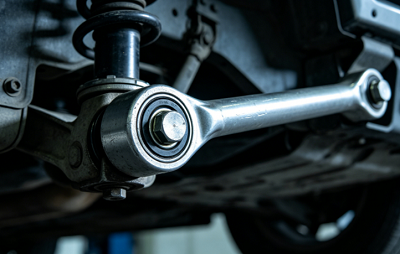
Introduction
If you’re involved in machinery design, manufacturing, maintenance, or procurement, you’ve likely asked:What are rod end bearings used for? These small but powerful components appear in nearly every industry that requires flexible, durable mechanical linkage. A rod end bearing enables smooth angular movement, absorbs vibration, compensates for misalignment, and transmits loads safely — making it irreplaceable in modern equipment.
Whether you work with automotive systems, agricultural machinery, industrial robots, construction equipment, or hydraulic systems, understanding what rod end bearings are used for helps you select the right parts, reduce failures, lower maintenance costs, and improve equipment reliability.
This complete, easy-to-read guide answers every question about rod end bearing applications, functions, working principles, suitable environments, and selection tips.
At Gonuo Hardware, we are a professional manufacturer of high-performance rod end bearing products with over 20 years of experience, ISO 9001 certification, and global delivery to 70+ countries. This guide shares industry knowledge to help you fully understand what rod end bearings are used for and how they add value to your projects.
1. Quick Overview: What Is a Rod End Bearing?
Before diving into applications, let’s briefly define a rod end bearing. A rod end bearing (also called a spherical rod end, heim joint, or rose joint) is a compact mechanical articulation component. It combines a precision spherical ball, outer race, and threaded shank (male or female) to allow oscillating, tilting, and rotational movement while supporting radial, axial, and shock loads.
Its greatest advantage is misalignment compensation, which prevents binding, wear, and breakage caused by installation errors, shaft deflection, or structural movement. This unique ability explains whyrod end bearing parts are used across so many industries.
2. Core Functions That Define Rod End Bearing Applications
Every use of a rod end bearing relies on these key functions:
Allows angular deflection of ±10° to ±15°
Transmits tension, compression, and radial loads
Reduces friction and noise
Absorbs shock and vibration
Prevents jamming caused by misalignment
Extends service life of linkage systems
These functions make the rod end bearing the first choice for flexible, high-strength connections.
3. What Are Rod End Bearings Used For? Main Industry Applications
3.1 Automotive & Transportation
One of the most common answers to what are rod end bearings used for is automotive steering and suspension. Rod end bearing components are widely applied in steering linkages, tie rods, suspension control arms, shock absorber mounts, and transmission shift linkages. A rod end bearing provides stable pivoting, absorbs road shock, and ensures smooth, safe handling for vehicles.
3.2 Agricultural Machinery
Farm equipment operates in dirty, vibrating, high-load conditions — perfect for rod end bearing use. Tractor control linkages, harvester actuator joints, planter mechanisms, and hydraulic cylinder connections all depend on durable rod end bearing units. The sealed, heavy-duty structure resists dust, mud, and moisture for long working life in harsh farm environments.
3.3 Industrial Automation & Robotics
Modern automation depends on precision movement — exactly what a rod end bearing delivers. Robotic arm joints, pneumatic actuators, conveyor tensioners, and packaging machinery linkages adopt high-precision rod end bearing to ensure repeatable, stable, low-tolerance motion during continuous operation.
3.4 Construction & Heavy Machinery
In extreme-load environments, rod end bearing parts strengthen critical connections. Excavator booms, crane hydraulic joints, loader control systems, and bulldozer suspension parts use heavy-duty rod end bearing to withstand continuous shock, pressure, and mechanical stress.
3.5 Marine & Offshore Equipment
Saltwater and high humidity demand corrosion-resistant solutions. Ship steering linkages, hatch control arms, and deck machinery commonly use stainless steel rod end bearing to resist seawater erosion and maintain long-term stability in marine conditions.
3.6 Other Specialized Usage Scenarios
Rod end bearing products also serve fitness equipment, medical devices, textile machinery, and printing machines. Any mechanical system requiring flexible pivot connection and vibration reduction needs qualified rod end bearing components.
4. Different Types of Rod End Bearings and Their Uses
4.1 Male Thread Rod End Bearing
Used for automotive suspension, outdoor machinery, and exposed linkage structures for easy installation.
4.2 Female Thread Rod End Bearing
Suitable for compact automation equipment and precision instruments with limited installation space.
4.3 Stainless Steel Rod End Bearing
Applied in marine, chemical, and food processing industries for anti-rust and anti-corrosion performance.
4.4 Heavy-Duty Rod End Bearing
Designed for construction machinery, mining equipment, and large hydraulic systems under extreme loads.
5. Key Advantages of Rod End Bearings in Mechanical Systems
After learning what rod end bearings are used for, it is necessary to understand why engineers widely choose rod end bearing products:
Excellent misalignment compensation to avoid mechanical jamming
High load capacity for tension, compression and radial force
Low friction and quiet sliding movement
Strong shock absorption and anti-vibration performance
Wear-resistant material extends component service life
Simple installation and convenient later replacement
6. Practical Tips to Choose Suitable Rod End Bearings
To match your actual usage scenarios, follow these simple selection steps:
1. Confirm load requirement: Distinguish light load, medium load and heavy load working conditions.
2. Select thread type: Choose male thread or female thread based on installation structure.
3. Reasonable material selection: Carbon steel for general use, stainless steel for corrosive environments.
4. Sealed or lubricated type: Sealed bearings for dusty outdoors; greasable bearings for heavy continuous production.
7. Daily Maintenance to Extend Rod End Bearing Lifespan
Even high-qualityrod end bearing requires standardized maintenance:
Avoid over-tightening during installation to prevent internal deformation
Keep the bearing surface clean to prevent dust and impurity accumulation
Regularly replenish lubricating oil for greasable rod end bearings
Check looseness and abnormal noise periodically
8. Why Choose Gonuo Hardware for Rod End Bearings
With more than 20 years of manufacturing experience, Gonuo Hardware is a professional manufacturer focused on high-quality rod end bearing production. We strictly follow ISO 9001:2015 quality standards, equipped with advanced CNC production lines and independent testing laboratories.
We supply carbon steel, alloy steel, and stainless steel rod end bearing products, supporting OEM and ODM customization. With stable exports to more than 70 countries, we provide 1-hour fast response and 24-hour quotation service for global buyers.
Conclusion
So, what are rod end bearings used for? Simply put, a rod end bearing is a fundamental flexible connecting component widely used in automotive, agricultural, automation, construction, marine and industrial machinery. It solves misalignment problems, reduces friction, absorbs vibration, and ensures stable mechanical movement.
CATEGORIES:


