


Which JM-T Rod End Bearing Size Should I Choose?
 Sep 24, 2026|
 View:47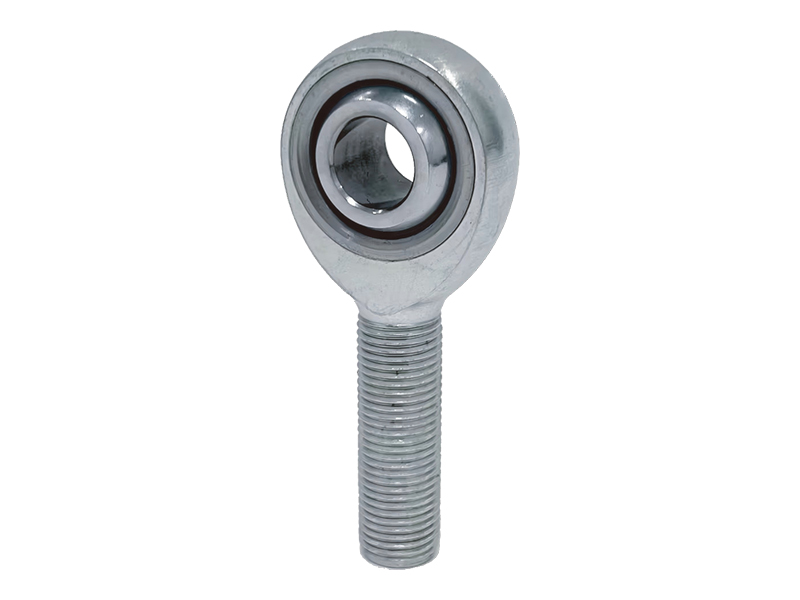
Choosing the right JM-T rod end bearing size depends on more than the bore diameter. Buyers should match the bearing to the required bore, external thread, thread direction, load rating, angular movement, installation space, and operating conditions.
The Gonuo JM-T series covers inch-standard male rod end bearing models from JM2T to JM16T, providing different bore and external-thread sizes for mechanical linkages, industrial automation, hydraulic and pneumatic cylinders, construction machinery, material handling equipment, and other applications.
The key question is not simply “Which JM-T is the largest?” but:
Which JM-T rod end bearing provides the required connection size, load capacity, movement, and installation dimensions for my application?
JM-T Rod End Bearing Size Range at a Glance
The JM-T series is an inch-standard male rod end bearing series with an external thread. The available models include JM2T, JM4T, JM6T, JM8T, JM10T, JM12T, JM14T, and JM16T.
| Model | Bore Diameter | External Thread | General Size Position |
|---|---|---|---|
| JM2T rod end bearing | 3.175 mm / 0.125 in | 6-32 | Small |
| JM4T rod end bearing | 6.35 mm / 0.250 in | 1/4-28 | Small |
| JM6T rod end bearing | 9.525 mm / 0.375 in | 3/8-24 | Small to medium |
| JM8T rod end bearing | 12.70 mm / 0.500 in | 1/2-20 | Medium |
| JM10T rod end bearing | 15.875 mm / 0.625 in | 5/8-18 | Medium to large |
| JM12T rod end bearing | 19.05 mm / 0.750 in | 3/4-16 | Large |
| JM14T rod end bearing | 22.225 mm / 0.875 in | 7/8-14 | Large |
| JM16T rod end bearing | 25.40 mm / 1.000 in | 1-1/4-12 | Largest standard JM-T size |
The bore and thread information should always be checked against the current Gonuo technical drawing or product specification before ordering.
What Does the JM-T Model Number Mean?
The JM-T designation identifies the product series, while the number corresponds to the nominal inch bore size.
For example:
JM2T → approximately 0.125 in bore
JM4T → approximately 0.250 in bore
JM6T → approximately 0.375 in bore
JM8T → approximately 0.500 in bore
JM10T → approximately 0.625 in bore
JM12T → approximately 0.750 in bore
JM14T → approximately 0.875 in bore
JM16T → approximately 1.000 in bore
However, the model number alone does not provide enough information for final selection. The external thread specification, load rating, overall dimensions, angular movement, and installation requirements also need to match the application.
Step 1: Check the Required Bore Diameter
The first step is to identify the diameter of the pin, bolt, or shaft that passes through the spherical bearing.
For example, if your mechanical connection requires a nominal 1/2-inch bore, the JM8T is the corresponding JM-T size to investigate.
If the required bore is approximately:
1/8 in → start with JM2T
1/4 in → start with JM4T
3/8 in → start with JM6T
1/2 in → start with JM8T
5/8 in → start with JM10T
3/4 in → start with JM12T
7/8 in → start with JM14T
1 in → start with JM16T
The bore should match the mating pin or shaft while also satisfying the application's load and movement requirements.
Do not select a JM-T rod end bearing by bore diameter alone.
A correct selection also requires checking the load rating and complete installation dimensions. Professional rod-end selection guidance similarly treats bore, thread configuration, and load-carrying capability as separate selection factors.
Step 2: Check the External Thread
JM-T is a male rod end bearing, meaning the threaded shank has an external thread.
The thread must match the mating component.
| JM-T Model | External Thread |
|---|---|
| JM2T | 6-32 |
| JM4T | 1/4-28 |
| JM6T | 3/8-24 |
| JM8T | 1/2-20 |
| JM10T | 5/8-18 |
| JM12T | 3/4-16 |
| JM14T | 7/8-14 |
| JM16T | 1-1/4-12 |
For threaded mechanical connections, both the nominal thread size and pitch must be compatible with the mating component. Rod-end references distinguish male external threading from female internal threading and identify thread dimensions as a key part of selection.
Why Is Thread Matching Important?
A bearing may have the correct bore but still be unsuitable if its threaded shank does not match the equipment.
Before ordering, confirm:
External or internal thread
Nominal thread diameter
Thread pitch
Thread standard
Right-hand or left-hand thread
Available thread engagement
For example, a JM10T rod end bearing uses a 5/8-18 external thread. If the mating component requires a different thread size or pitch, JM10T would not be the correct direct replacement.
Step 3: Check the Load Rating
After confirming the bore and thread, check whether the selected JM-T model can withstand the required load.
The bearing should be evaluated according to:
Radial load
Static load
Dynamic or alternating load
Shock loading
Frequency of oscillation
Safety factor
Expected service conditions
A larger bore does not automatically mean that a particular bearing is suitable for every high-load application.
For this reason, buyers should compare the load rating of the specific JM-T model with the actual operating load rather than selecting a model based only on the mating bolt diameter.
SKF's rod-end selection guidance likewise recommends confirming that the selected rod-end body's load-carrying capability meets the application requirements; if it does not, the bearing size should be increased and the selection repeated.
Step 4: Check Angular Movement
A rod end bearing is typically used where connected components need to accommodate angular movement or misalignment.
Therefore, check:
Required articulation angle
Available clearance
Movement direction
Oscillation frequency
Interference with surrounding components
The required angular movement should be compared with the allowable angular specification of the selected JM-T model.
Rod ends are designed around spherical movement and self-alignment, allowing smooth rotation or oscillation between connected components.
Step 5: Check the Complete Installation Dimensions
Bore and thread are only two dimensions.
Before replacing an existing rod end or designing a new assembly, also check:
Bore diameter
Head diameter
Housing width
Overall length
Thread length
Center height
Ball diameter
Available installation clearance
Angular clearance
This is especially important when replacing an existing bearing.
A replacement JM-T rod end bearing must fit both the shaft/pin connection and the surrounding mechanical structure.
Why Can't I Select a Rod End by Bore Size Alone?
Because two rod end bearings with similar bore diameters can have different:
Thread configurations
Housing dimensions
Overall lengths
Load ratings
Angular movement
Materials
Sliding structures
Therefore, the complete dimensional drawing should be used for final engineering verification.
Step 6: Consider the Self-Lubricating Design
JM-T is designed as a self-lubricating spherical plain rod end bearing using a steel/PTFE composite sliding structure.
This makes the lubrication design an important selection factor when the bearing is installed in locations where regular lubrication is inconvenient.
Typical questions include:
Is regular relubrication practical?
Is the bearing located in a difficult-to-access position?
Does the application involve oscillating movement?
What operating temperature will the bearing experience?
Is the environment exposed to dust, moisture, or contaminants?
Self-lubricating rod ends are specifically designed around a self-lubricating spherical plain bearing inserted into a rod-end body.
For JM-T, it is better to describe the product as self-lubricating with reduced lubrication requirements rather than assuming that every application is completely maintenance-free.
JM2T vs JM4T vs JM6T: Which Small JM-T Size Should I Choose?
The smaller JM-T models are intended for more compact mechanical connections.
JM2T Rod End Bearing
JM2T is the smallest model in the listed JM-T range, with a nominal 1/8-inch bore and 6-32 external thread.
It can be considered when:
Installation space is limited
A small pin or shaft is required
The mechanical load is within the model's rated capacity
An inch-standard external thread is required
JM4T Rod End Bearing
JM4T has a nominal 1/4-inch bore and 1/4-28 external thread.
Compared with JM2T, it provides a larger connection size and should be considered when the mating pin, shaft, or threaded connection requires a 1/4-inch configuration.
JM6T Rod End Bearing
JM6T uses a nominal 3/8-inch bore and 3/8-24 external thread.
It provides a larger connection than JM4T and can be considered for medium-sized mechanical linkages and industrial assemblies, subject to the required load and dimensions.
JM8T vs JM10T: Which One Should I Choose?
This is a common selection point for industrial applications.
Choose JM8T when:
A nominal 1/2-inch bore is required
The mating component uses a 1/2-20 external-thread-compatible configuration
The required load is within the JM8T rating
The smaller installation dimensions are preferred
Consider JM10T when:
A nominal 5/8-inch bore is required
The mating component requires a 5/8-18 thread
The application requires the larger JM10T connection
The JM10T load rating and dimensions better match the design
For example, JM10T rod end bearing has a nominal 5/8-inch bore and 5/8-18 external thread. The final choice should still be based on the complete Gonuo specification rather than bore size alone.
JM12T vs JM14T vs JM16T: How Do I Choose?
The larger JM-T models are intended for larger mechanical connections.
JM12T Rod End Bearing
JM12T provides a nominal 3/4-inch bore and 3/4-16 external thread.
Consider JM12T when both the mating pin/shaft and threaded connection require a 3/4-inch-class configuration.
JM14T Rod End Bearing
JM14T provides a nominal 7/8-inch bore and 7/8-14 external thread.
Before selecting JM14T, verify the required load, housing dimensions, and installation clearance.
JM16T Rod End Bearing
JM16T is the largest standard model in the listed JM-T range, with a nominal 1-inch bore and 1-1/4-12 external thread.
It is intended for larger mechanical connections where the bore, thread, load, and installation dimensions match the application.
JM-T Size Selection: Quick Decision Guide
Use the following process when selecting a JM-T rod end bearing:
If your required bore is about 1/8 inch → start with JM2T
If your required bore is about 1/4 inch → start with JM4T
If your required bore is about 3/8 inch → start with JM6T
If your required bore is about 1/2 inch → start with JM8T
If your required bore is about 5/8 inch → start with JM10T
If your required bore is about 3/4 inch → start with JM12T
If your required bore is about 7/8 inch → start with JM14T
If your required bore is about 1 inch → start with JM16T
Then verify: Bore → Thread → Load → Angular Movement → Installation Dimensions → Operating Conditions
This sequence provides a more reliable selection process than choosing the model from bore diameter alone.
What If I Need a Left-Hand Thread?
Standard JM-T configurations use a right-hand thread, while applicable left-hand versions use the L suffix.
For example:
JM10T → standard right-hand version
JML10T → left-hand version
A left-hand thread is required when the mating component or mechanical adjustment mechanism is designed for a left-hand connection.
Always confirm the complete part number and thread direction before placing an order. Left- and right-hand threads must match the mating component.
JM-T vs JF-T: Which Rod End Bearing Do I Need?
If you are choosing between JM-T and JF-T, the first question is whether your assembly requires a male or female thread.
| Feature | JM-T | JF-T |
|---|---|---|
| Rod end type | Male | Female |
| Thread configuration | External | Internal |
| Standard | Inch | Inch |
| Sliding structure | Self-lubricating | Self-lubricating |
| Typical selection | External threaded connection | Internal threaded connection |
Choose JM-T when the rod end needs an external threaded shank.
Choose JF-T when the rod end needs an internal threaded connection.
JM-T Rod End Bearing Selection Checklist for Buyers
Before sending an inquiry to a rod end bearing manufacturer or supplier, prepare the following information:
JM-T model: JM2T–JM16T
Required bore: inch or mm
External thread: size and pitch
Thread direction: right-hand or left-hand
Required load rating
Required angular movement
Operating temperature
Movement type: oscillating, rotating, or articulating
Installation dimensions
Quantity
Application
OEM drawing, if available
Packaging requirements
Inspection requirements
Providing this information allows the supplier to confirm the appropriate model more efficiently.
JM-T Rod End Bearing Manufacturer & Supplier
Gonuo supplies JM-T male rod end bearings in multiple inch-standard sizes from JM2T to JM16T.
The JM-T series is designed for applications requiring:
Male/external threaded connection
Inch-standard dimensions
Self-lubricating spherical plain bearing performance
Different bore sizes
Different load capacities
Right-hand or applicable left-hand thread configurations
For OEM and industrial procurement projects, buyers can provide a model number, technical drawing, required quantity, or application details for specification confirmation.
If you are unsure whether to select JM8T, JM10T, JM12T, JM14T, or JM16T, provide the required bore, thread specification, working load, and installation dimensions. The correct model can then be verified against the complete technical specification.
FAQ
Which JM-T rod end bearing size should I choose?
Start by identifying the required bore diameter and external thread, then verify load rating, angular movement, installation dimensions, and operating conditions. For example, JM8T has a nominal 1/2-inch bore, while JM10T has a nominal 5/8-inch bore.
What is the smallest JM-T rod end bearing?
JM2T is the smallest model in the listed JM-T range, with a nominal 1/8-inch bore and 6-32 external thread.
What is the largest JM-T rod end bearing?
JM16T is the largest standard model in the listed range, with a nominal 1-inch bore and 1-1/4-12 external thread.
What is the bore size of JM10T?
The JM10T rod end bearing has a nominal bore of 5/8 inch (15.875 mm) and uses a 5/8-18 external thread.
What is the difference between JM8T and JM10T?
JM8T has a nominal 1/2-inch bore and 1/2-20 external thread, while JM10T has a nominal 5/8-inch bore and 5/8-18 external thread. The final choice should also consider load rating and complete installation dimensions.
What thread does JM16T use?
The JM16T rod end bearing uses a 1-1/4-12 external thread and has a nominal 1-inch bore.
Are JM-T rod end bearings self-lubricating?
Yes. The JM-T series uses a steel/PTFE composite sliding structure designed for self-lubricating operation and reduced lubrication requirements.
Can I order a left-hand JM-T rod end bearing?
Applicable left-hand versions are available with the L suffix, such as JML10T. Confirm the required thread direction and complete part number before ordering.
Can Gonuo help me select the correct JM-T model?
Yes. For selection support, provide the required bore, thread specification, working load, thread direction, application, and installation dimensions. A technical drawing is also useful for OEM or replacement applications.
CATEGORIES: